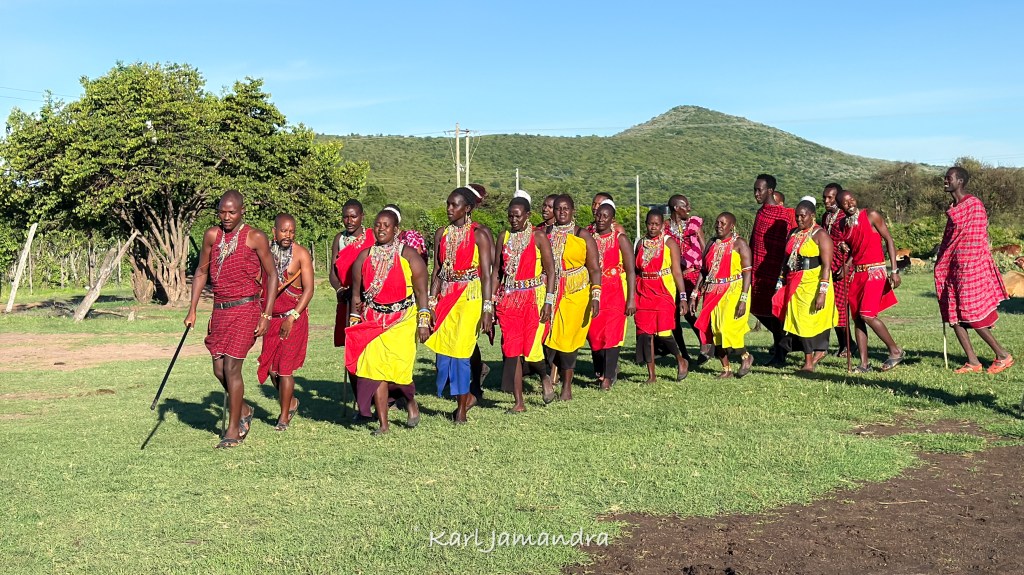
No trip to the Maasai Mara is complete without visiting a traditional Maasai village. The Maasai people are considered the guardians of the Maasai land, and part of this land is the whole Maasai Mara. Let’s take a deeper look at them and their community in this blog post.
By the way, you can check out my travel guide about Kenya to learn how to go here, what to visit, where to stay, among other things. If you want to focus about Kenya’s pride, the Maasai Mara, check my Maasai Mara blog as well.
THE MAASAI PEOPLE
Who are the Maasai people? The Maasai, often seen as the guardians of the Maasai Mara, have lived in harmony with the region’s wildlife for many centuries. They are an indigenous group in East Africa, native to both Kenya and Tanzania. They are semi-nomadic pastoralists, which means they move with their herds of cattle, goats and sheep in search of water and grazing land. During our visit, we have learned that their houses (called manyatta) only last for about 5 to 10 years depending on weather conditions, maintenance, and the frequency of the Maasai’s relocation. After the said period of time, they move once more to look for a good place to stay.
OUR EXPERIENCE
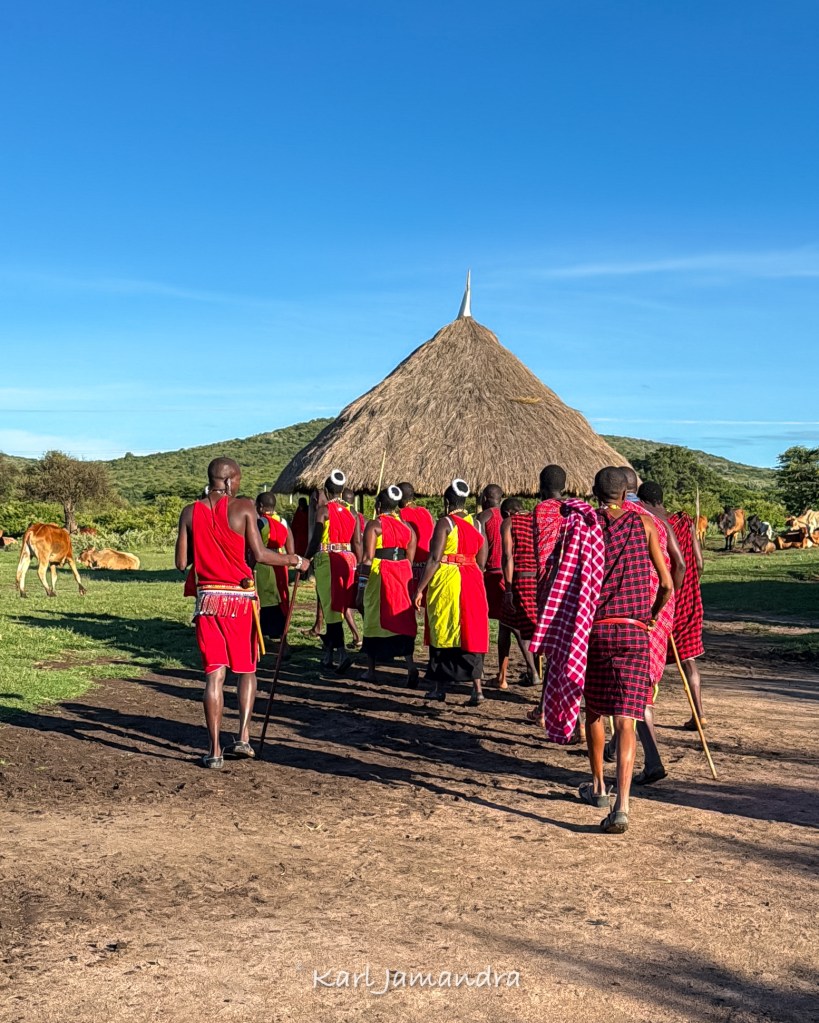
It was our last day in the Maasai Mara when we visited a Maasai village. Part of our itinerary was visiting the Maasai people’s place of dwelling. We woke up very early that morning. We heard the singing of the birds and chirping of insects around our tent, which was our accommodation for several days in the Maasai Mara. It was still dark, but even then, I still stepped outside to take some time to listen more to my surrounding. I went back inside, and started to prepare. Gerard and I took turns in taking a shower and packing our things, which aren’t easy because we wanted to stay for a little bit more!
When we were done packing our bags, we headed to the main restaurant of our accommodation to eat breakfast. After a short while, I looked around our accommodation. This had been our home for a few days, and I was thankful to have felt safe and protected during the time we were here. We then put our bags in the safari jeep. After only about ten minutes, we have reached the village.
The Welcome Dance
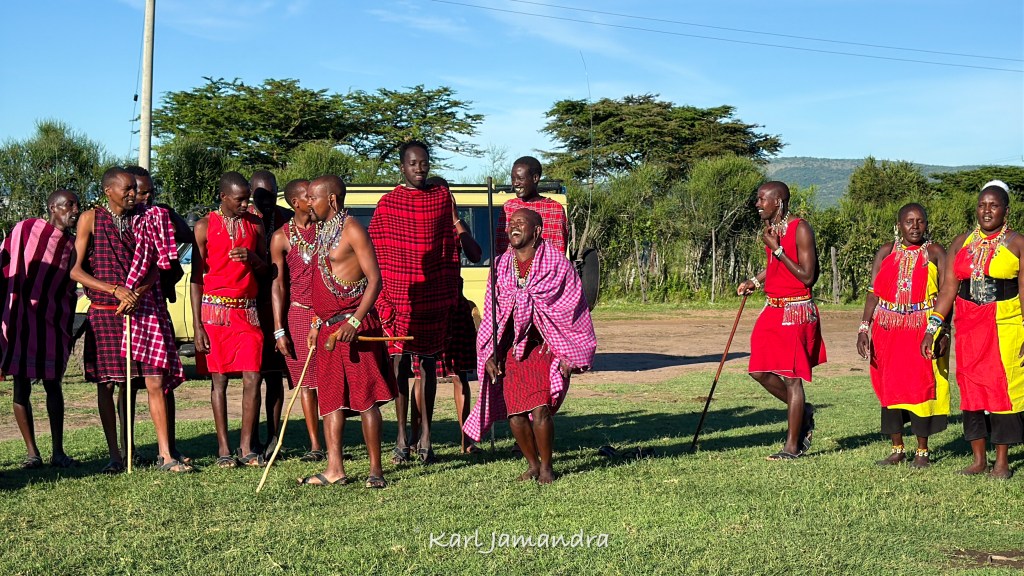
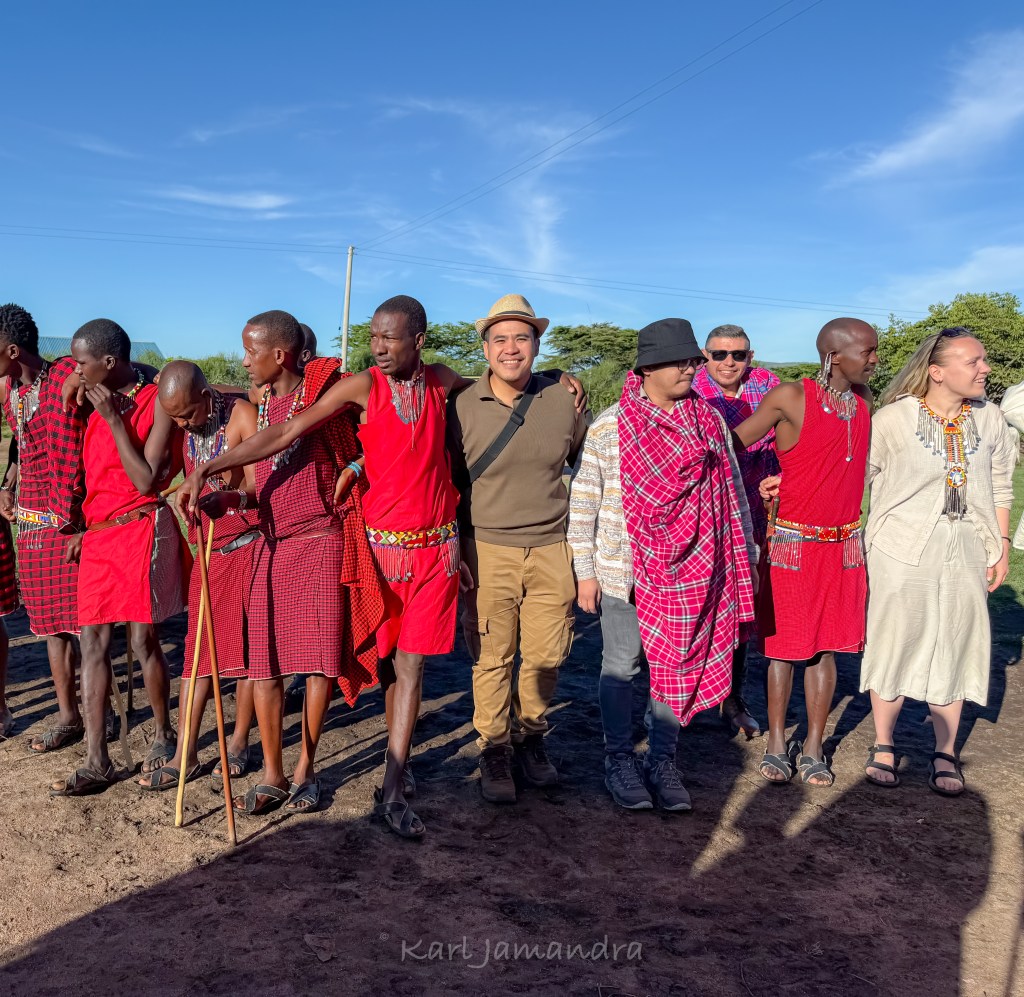
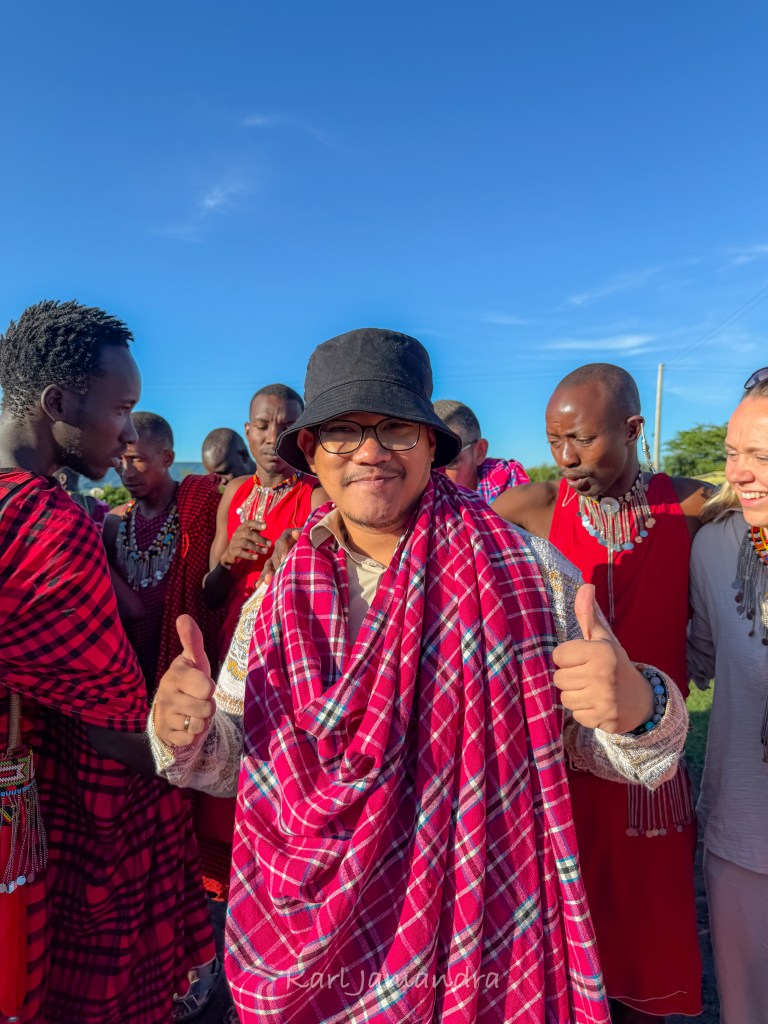
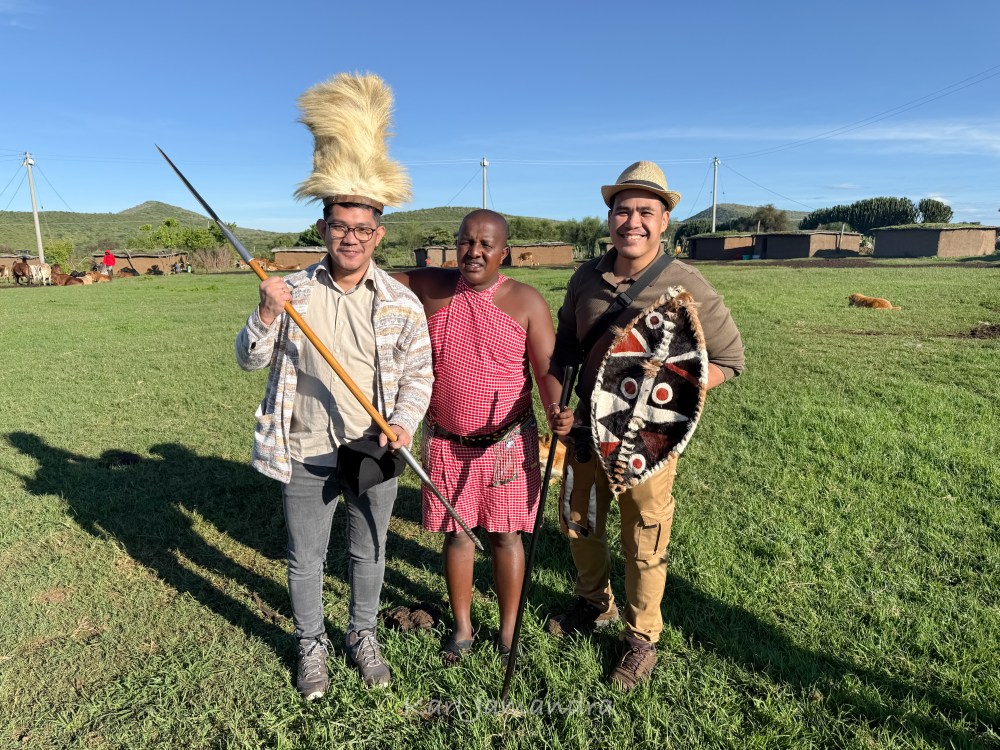
Upon arriving, we were immediately welcomed by the village chief’s son. He gathered the men and women of their village, and after some time, they performed a dance ritual for us, visitors! Called adumu, this is a traditional jumping dance in which the Maasai men demonstrate their strength, stamina and pride by coordinated, vertical jumps without letting their heels touch the ground. What happens during adumu is that first, they stand in a semicircle, chanting rhythmically in deep, resonant tones. One or two men would then step forward and begin to jump straight into the air, as high and as graceful as possible. The chieftain’s son explained later on that it is also used to woo females of the tribe. It is said that the higher the male jumps, the more admiration and respect he earns.
The Fire-Making Process
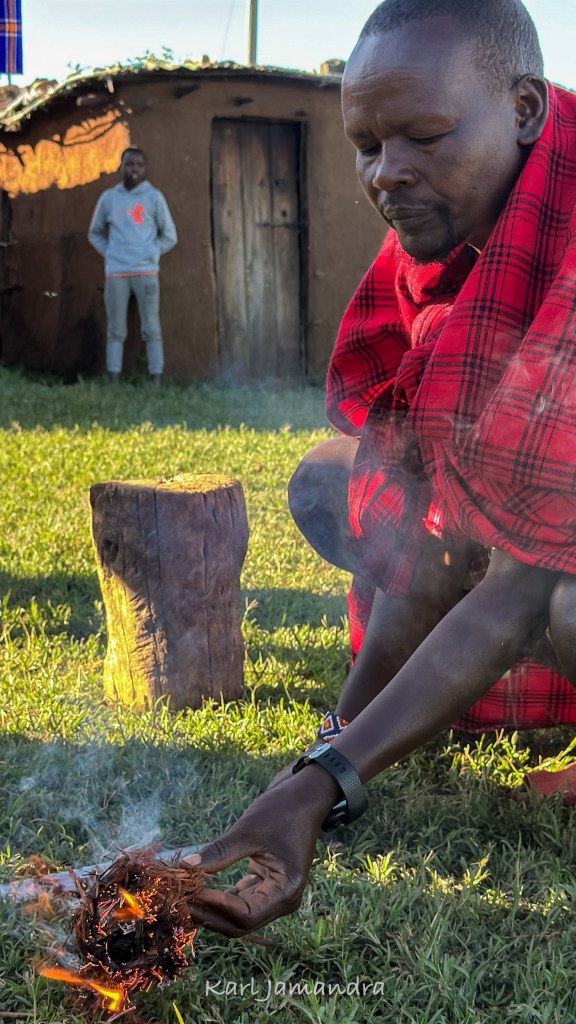
We were then shown the ways of life of their people, like how they make fire using only leaves and wooden sticks. A male villager was invited by the chieftain and his son to perform making fire in front of us.
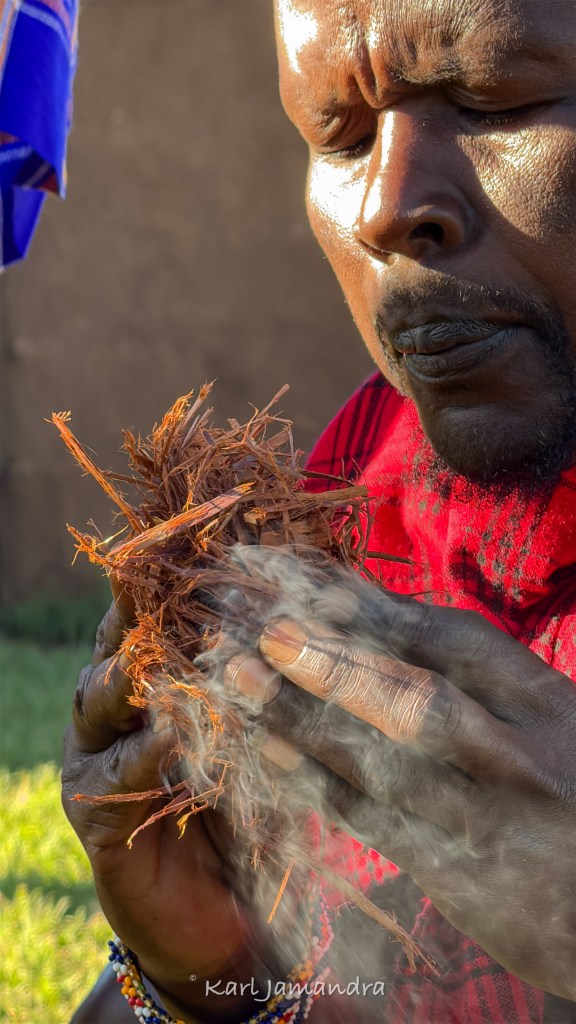
The Maasai method of making fire is a powerful symbol of their self-reliance, and ancestral knowledge. First, the man places the fire stick called olorrika upright into the notch of the fireboard called enkairo, and rapidly spins it between his hands, pressing downward. The friction is said to produce fine wood dust, which collects in the notch and begins to smoke as it heats up.
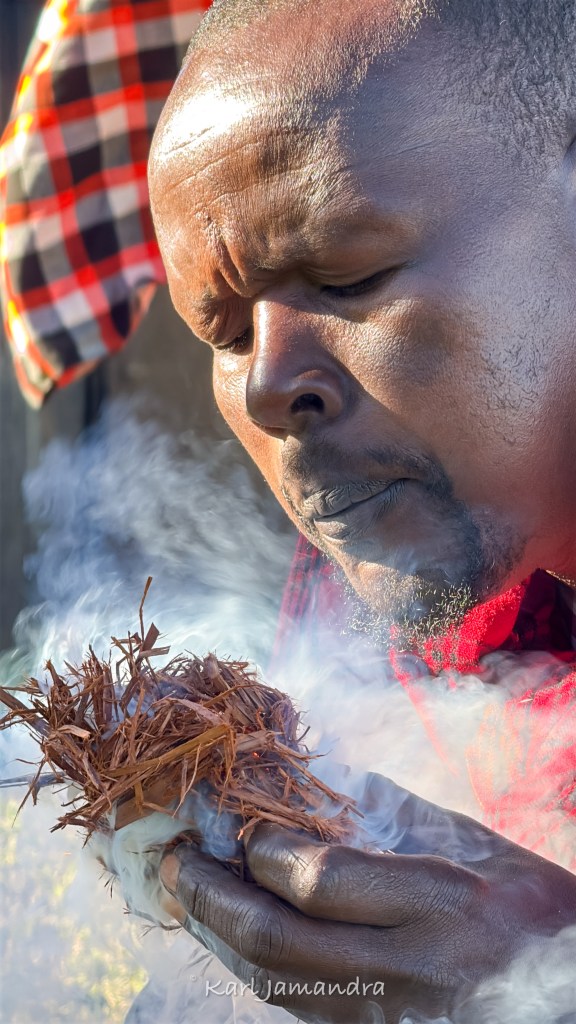
After enough heat is generated, the dust forms a tiny ember. The ember is then transferred carefully to a bundle of dry grass, which is then gently blown upon to ignite the flame.
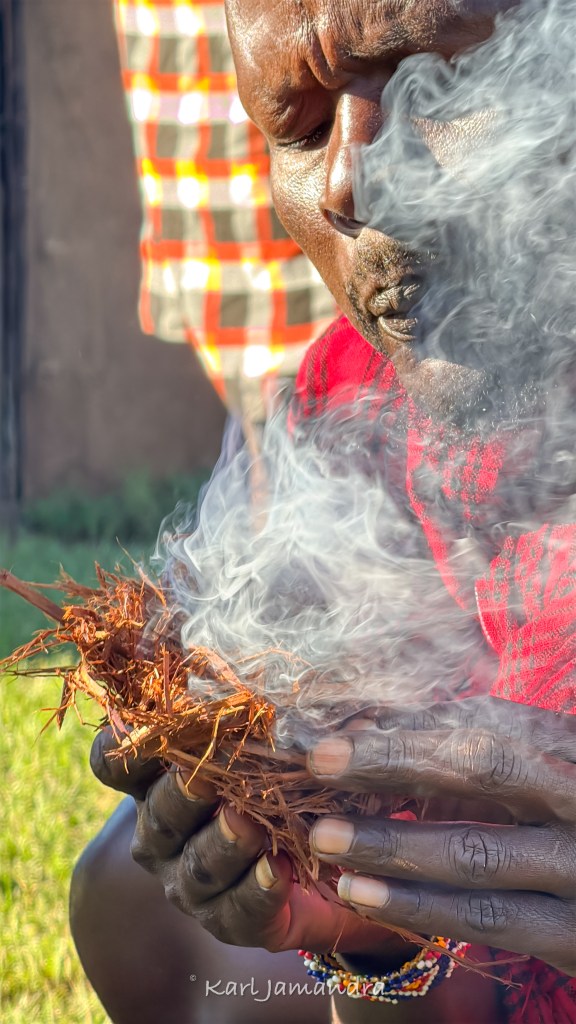
Once the grass catches fire, it’s fed with small to twigs to grow the flame.
The Home Visit
We were also encouraged to visit a village house, which is shaped like an oval, approximately 3-4 meters long, and 1.5 meters high. Called a manyatta, it sure seems so small when seen from the outside. However, we were surprised it had a lot of rooms when we were exploring it inside.
A native Maasai guide went with us inside, and showed what the rooms and spaces were. There was a small room for the baby cows, which they keep in the house (albeit the entrance). Beside it was a fireplace to keep them warm. When we went deeper inside, we saw a huge space where children of the family were sitting. This was supposedly the main living space, where they get to socialize. In the same space can be found the kitchen, where a small fireplace could be seen, and a cabinet-like mold in the general structure was used for their kitchen tools and dining sets. Adjacent to this room were at least three rooms: a guestroom (complete with bed), a room for the parents (where they were apparently sleeping at the time of our visit) and their kids aged 0 to 5 years, and the last one is the older children’s room.
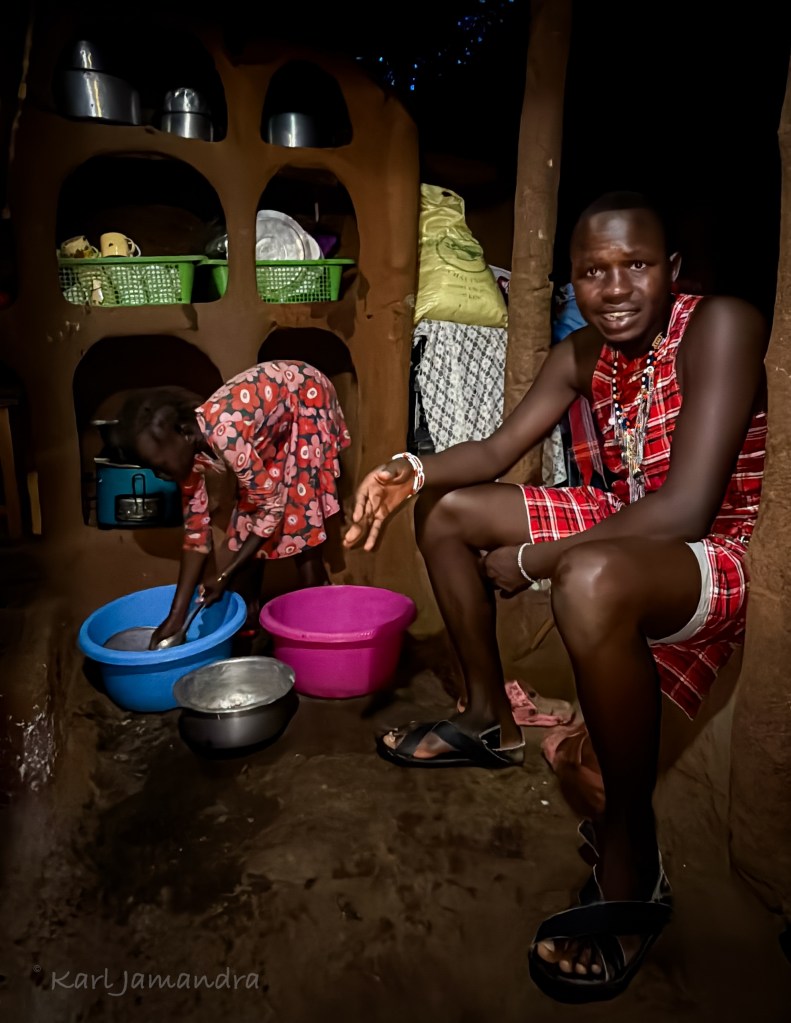
Our guide further said that that particular house took 2 months to build, and it’s expected to last for 9 years. After 9 years, they would move to the next village where they would build again their houses. He mentioned that termites would already be a big problem by that time. By then, they would be eating the house, which is basically made of clay and cow dung.
He further shared that it’s the ladies who build the Maasai houses. They also cook, take care of the kids, and do all the housework. The men, he reported, would gather food for the family, take care of the cattle, and the community.
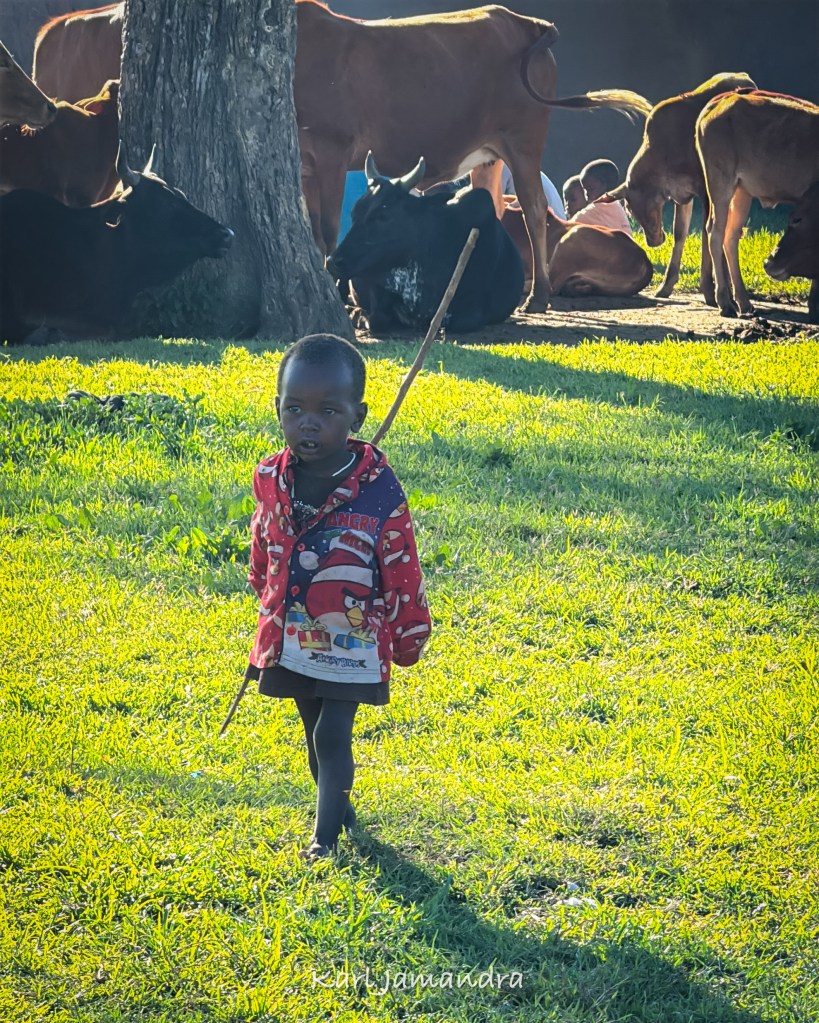
When we went outside of the house, our guide offered to sell us copper bracelets made by their blacksmith. He also showed a tooth necklace, which actually contains a lion tooth! The lion tooth necklace is said to give good luck and protection.
***
We’ve had an amazing time learning and experiencing the culture of the Maasai people during our short time visiting their village. I hope I got to inspire you to come and visit should you go to Maasai Mara. By the way, don’t hesitate to ask the villagers about any question you have in mind as they actually welcome questions from visitors so they can teach the Maasai culture!
As I write this blog post, I can’t help but look back at all the things we did in Maasai Mara. Experiencing a lot of things in the middle of the iconic savannah is nothing short of amazing. Everything felt surreal, from experiencing the hot air balloon safari, doing a whole day of game drive looking out for the animals of Maasai Mara, up to meeting the people considered to be the guardians of the place. It was a whole new experience that I would forever treasure!
 K.O. the Explorer