It has always been a mystery to me why the province of Compostela Valley changed its name a few years ago. On December 2019, a plebiscite ratified the law that proposed to rename it to Davao de Oro. When I got the chance to visit the province recently, I finally got to learn why.
As it turns out, changing the name was a great decision. Sir Jeoff, the tourism officer of Maragusan, explained that it was harder before to market the province because people would wonder where it was located. After the name change, people (mostly outside of Mindanao) would easily associate the province as part of the Davao Region. He further said that it would now appear more in search engines as part of the “Davao” name unlike before. (Imagine, the province also has a municipality called “Compostela” that certainly did confuse those who wanted to visit.)
Now that it has set its name right, the mystery lies on what people can explore and discover in this beautiful Mindanao province! A few months ago, we went to the highlands of the province – Maragusan – and in this municipality, we experienced cold and foggy mornings and stunning waterfalls!
WHERE IS DAVAO DE ORO? HOW ABOUT MARAGUSAN?
Davao de Oro
Davao de Oro is a province in the vast region of Mindanao, bordered by Davao del Norte to the west, Agusan del Sur to the North, Davao Oriental to the east and the Davao Gulf to the southwest. Covering an area of 4, 479.77 square kilometers, it has 11 municipalities with Nabunturan as its provincial capital. According to the 2020 census, the province has a population of 767,547. The primary language used in Davao de Oro is Cebuano. Don’t worry if you don’t know how to speak in Cebuano, though! Many of the people in Davao de Oro also know how to speak in Tagalog and English.
Maragusan
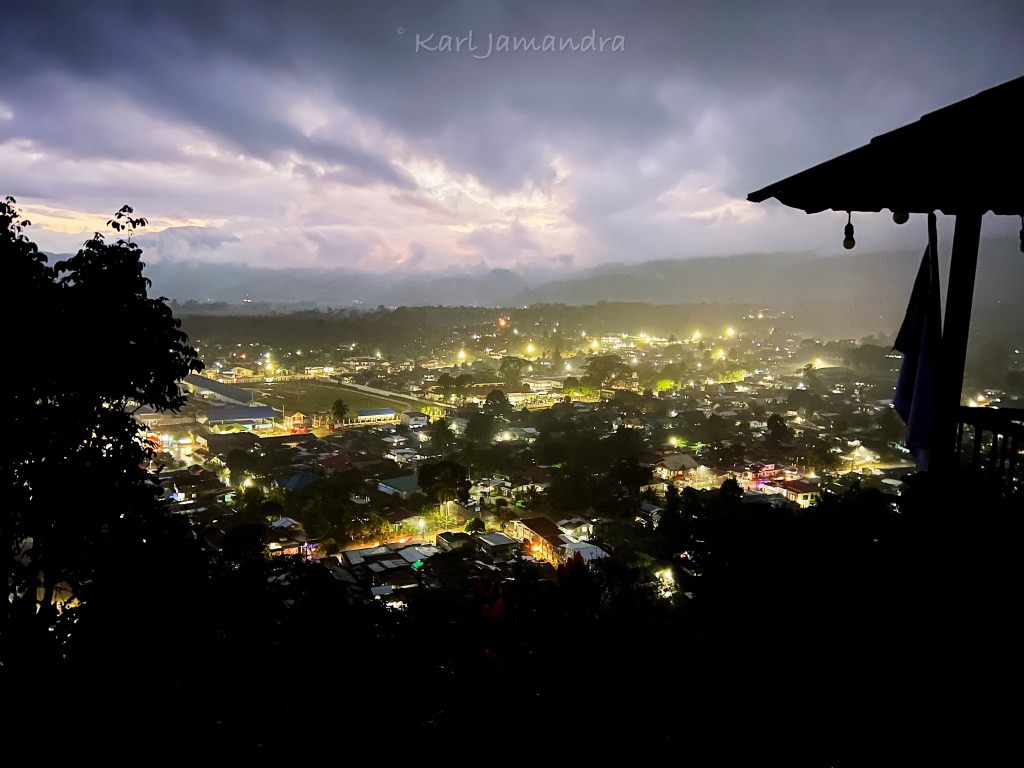
Formerly named San Marino, Maragusan is said to be the newest municipality of Davao de Oro as it was once a part of Mabini, another Davao de Oro municipality. Described as a far and secluded valley of the province, it is surrounded by rolling hills and mountainous terrain. Sir Jeoff, our tour guide, said that going here was difficult years ago due to mostly muddy roads. He further said that because it was Rodrigo Duterte, a known Davaoeno, who was elected to the presidency back in 2016, the national roads in the Davao Region have been fixed and concretized, including the ones leading to Maragusan.
Where did the name “Maragusan” come from? Still according to their official website, in the past the land was solely inhabited by Mansakas, the local tribal aborigines who used to live in the mountains and used kaingin as their primary source of living. They identified themselves as those from “Man-Agusan,” a native word meaning settlers along Agusan River. The waters of the Agusan River come from the valley’s boundaries and pass through several barangays of the municipality. Over time, “Man-Agusan” was then changed to “Maragusan” as it is used today.
HOW TO GO TO MARAGUSAN, DAVAO DE ORO?
There are several ways of going to Maragusan via land travel. If you are traveling from nearby cities or municipalities of other provinces like Mati and Tagum, you can ride the bus or the van. From Mati, you can also ride the bao-bao, which we did, and it took us about an hour and a half to reach the town proper.
If you’re coming from Davao City, go to their public transport terminals (e.g. Davao Ecoland Terminal) and ride the bus going to Tagum or Mati. Some sources say there are buses going to Nabunturan as well, though we didn’t ride one so I cannot confirm.
WHO TO CONTACT BEFORE GOING TO MARAGUSAN?
It’s really best to contact the tourism office of Maragusan before heading here so you can be informed by them of the best way to enjoy the travel spots in their municipality. Here’s the contact number of Sir Joeffer Bebat of Maragusan Tourism Office: 0917-167-0347.
WHERE TO STAY IN MARAGUSAN?
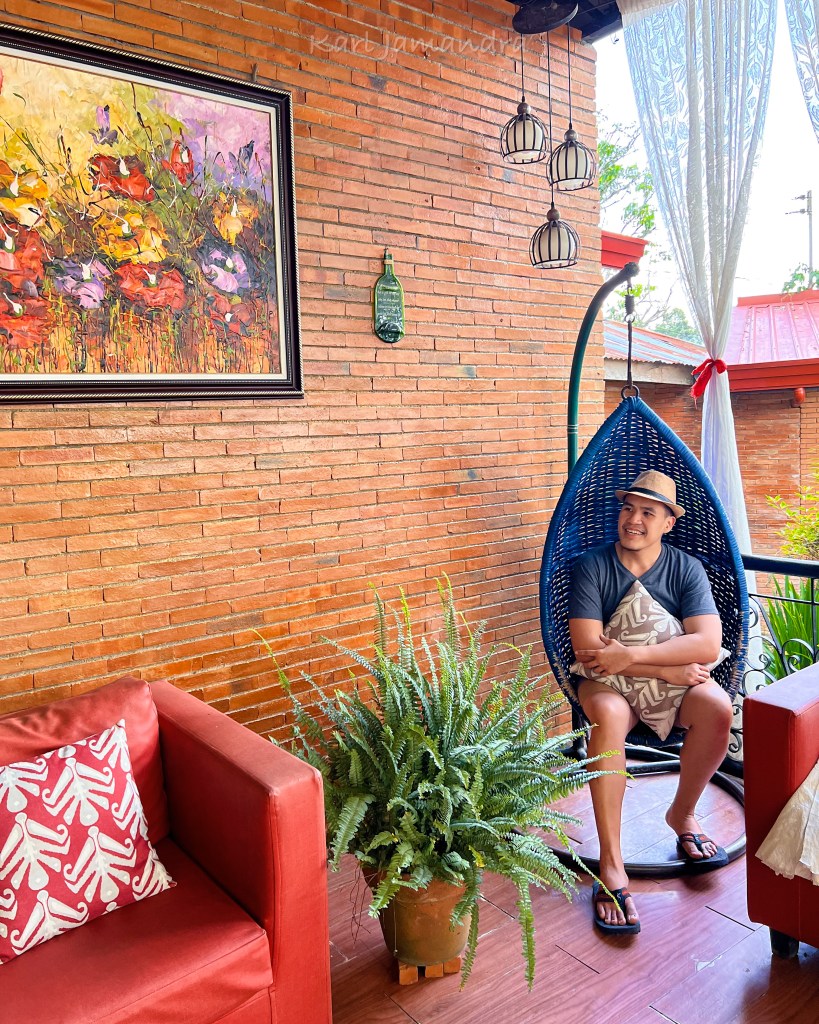
The Haven’s Peak Highland Resort
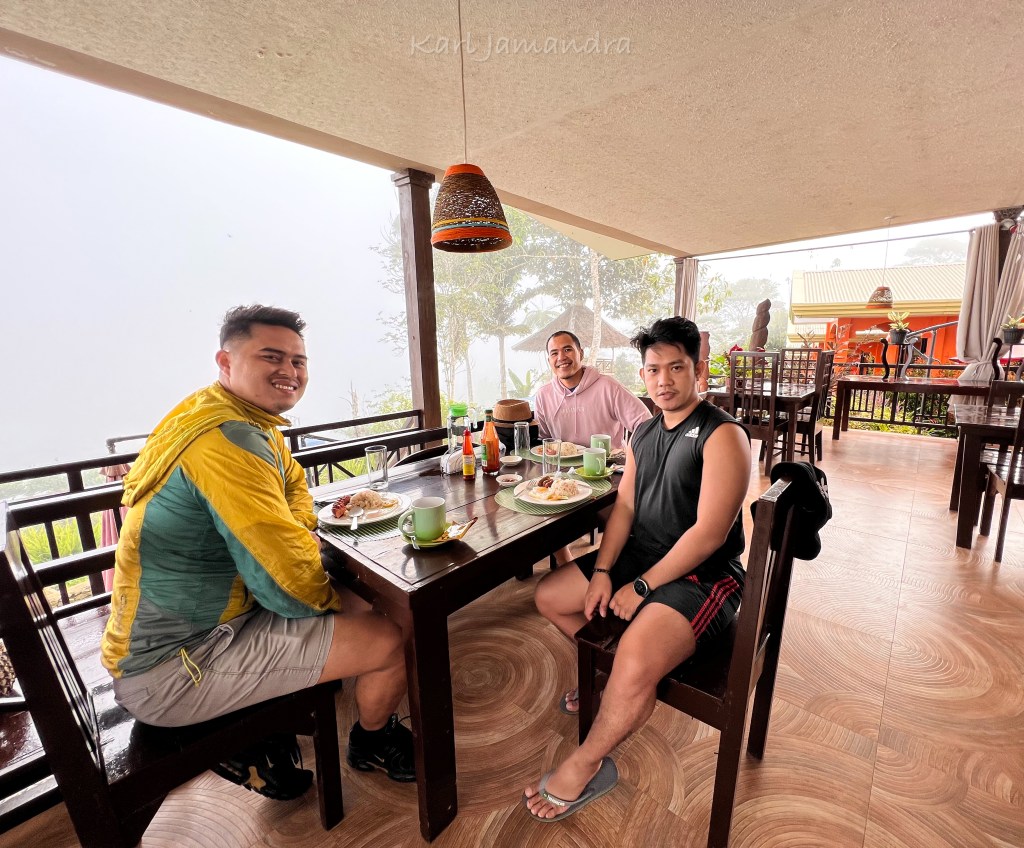
There are many options that you can choose from on where to stay in Maragusan. You’ll be tempted to book a night or two in its highland resorts that are quite far from town, which are actually a good place to see the sea of clouds. We opted to stay, though, in The Haven’s Peak because it is near the marketplace and the transport terminal. Not to mention its amazing vicinity! Check the pictures here to understand more of what I’m talking about!
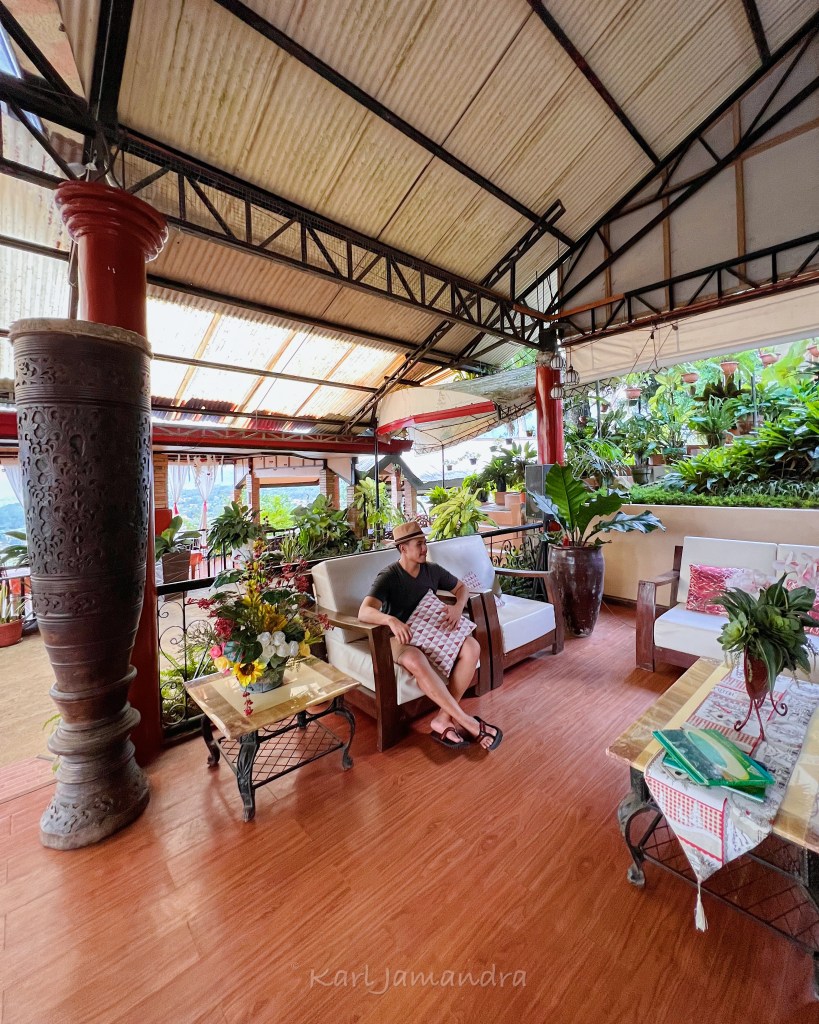
Located near the top of a mountain, Haven’s Peak is a good resort destination. According to its website (thehavenspeak.com), it has five (5) cottages that are aesthetically built to look like nipa hats. Each can accommodate 2 to 4 people. I personally love their room here because with Maragusan’s cold nights, you’d want a room that exudes warmth and comfort. During our stay, they definitely delivered!
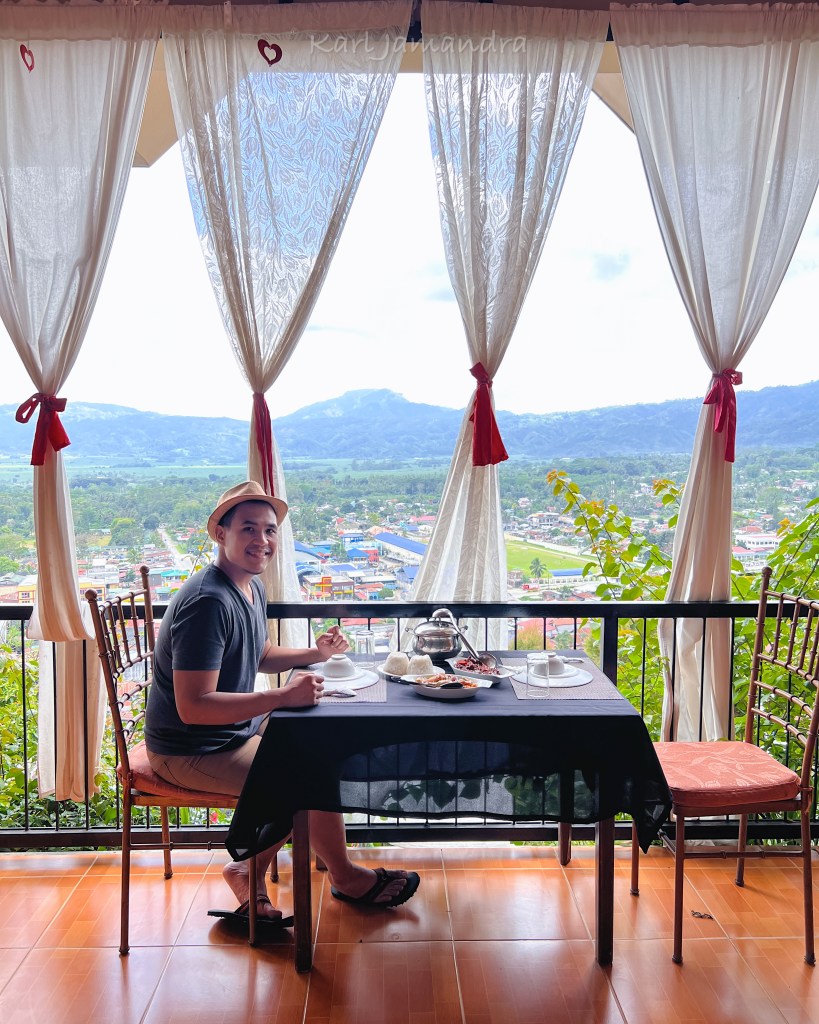
Aside from the said accommodation, the resort has swimming pools that people can enjoy during hot, sunny afternoons. It also has a restaurant that serves not just people who accommodate their rooms; it is also open to the public! In fact, during our second day in the province, the restaurant was packed with people at lunchtime. With a view so nice and food so sumptuous, this isn’t surprising at all!
WHAT TO EXPLORE IN MARAGUSAN?
Maragusan’s highland resorts
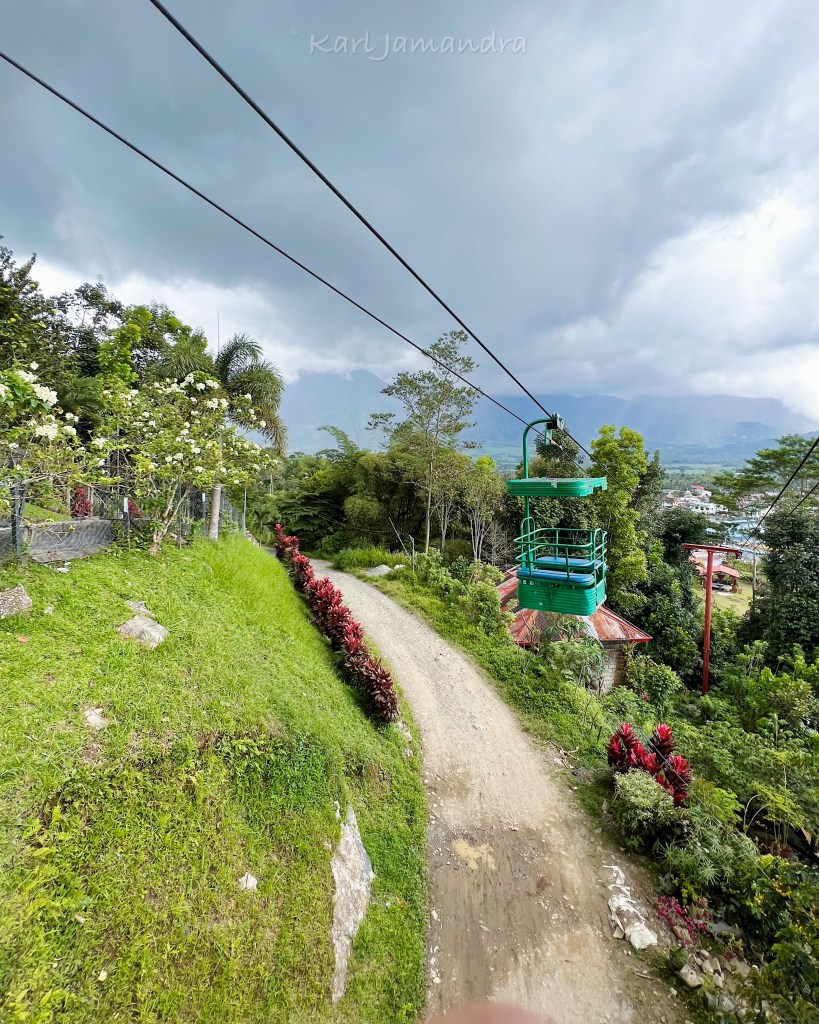
As mentioned, Maragusan is located at the mountainous terrain of Davao De Oro, making it one of the coldest places in Mindanao. In fact, it was dubbed as Davao Region’s summer capital, because of its cool climate. Resorts have been built in town in recent years to accommodate travelers and tourists who want to experience Maragusan.
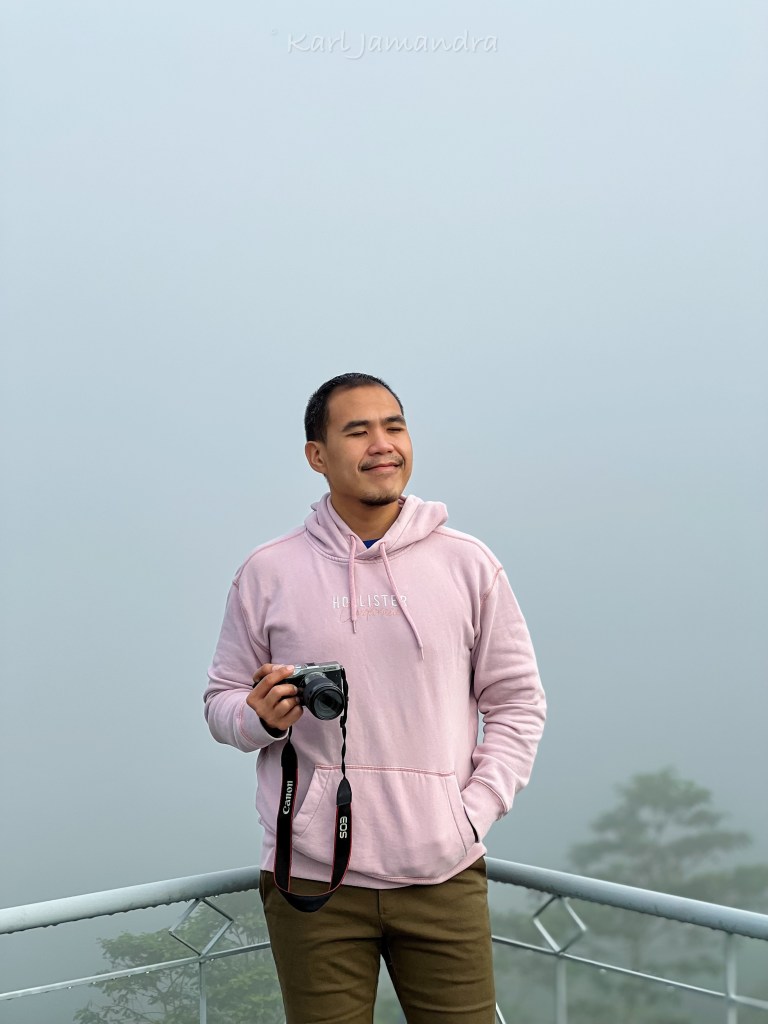
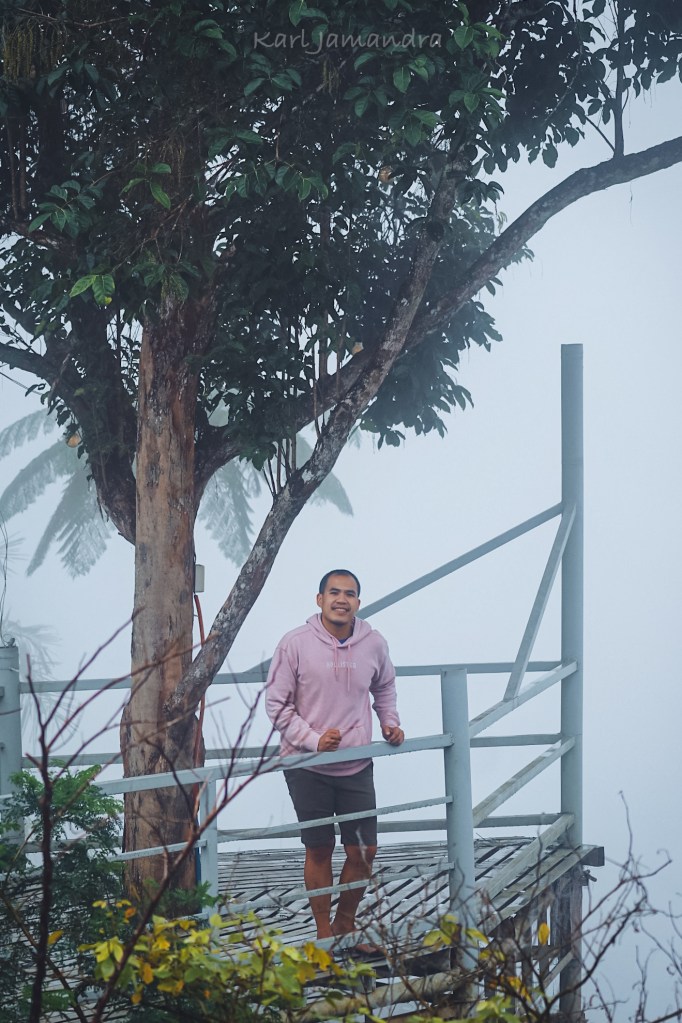
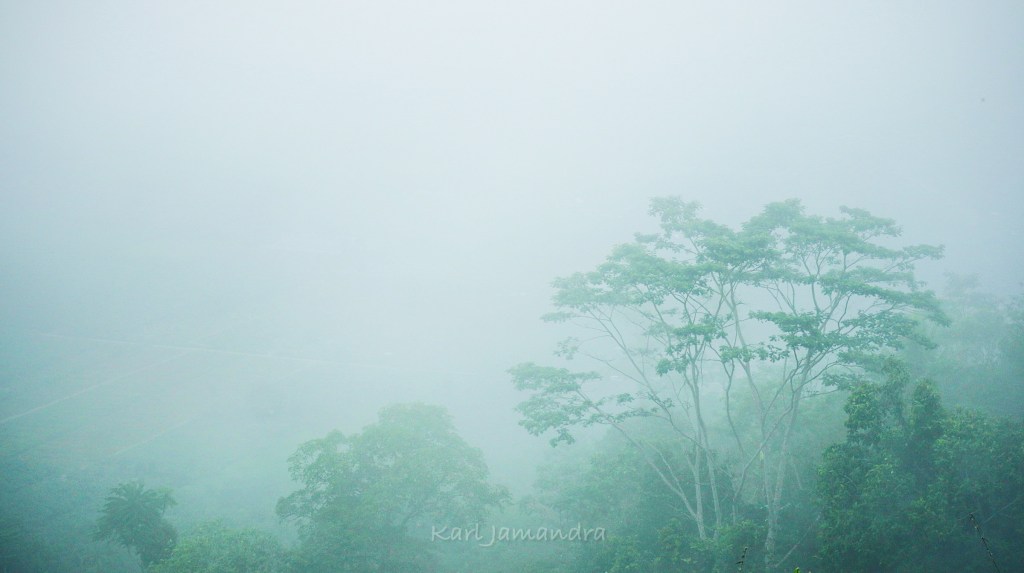
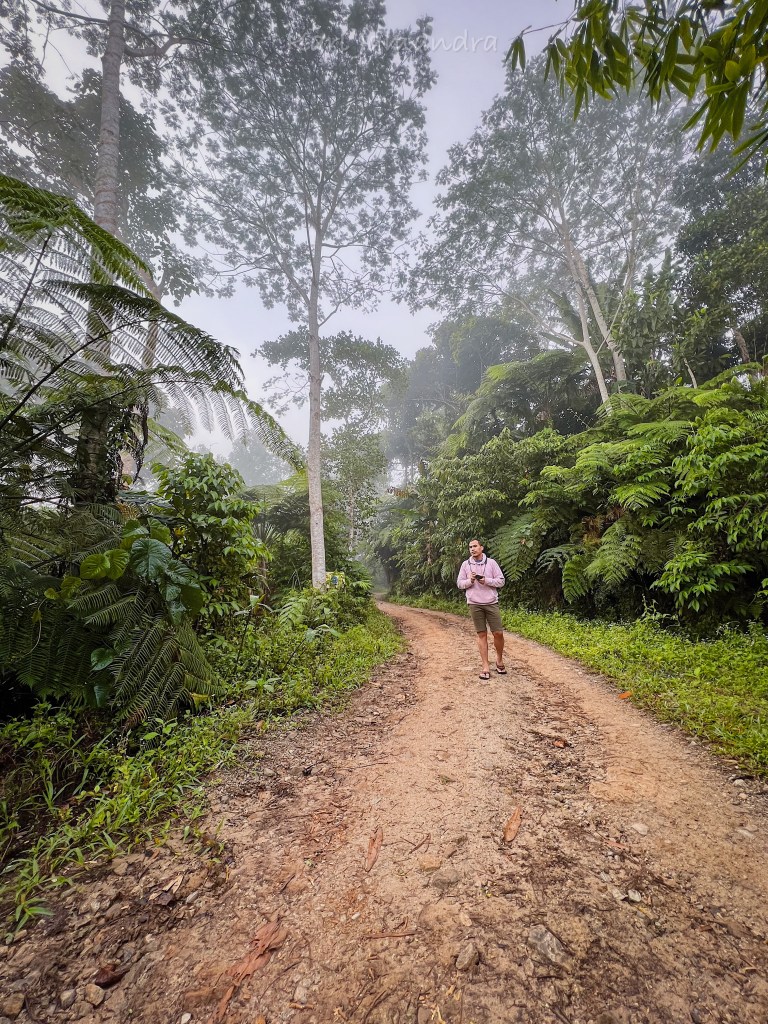
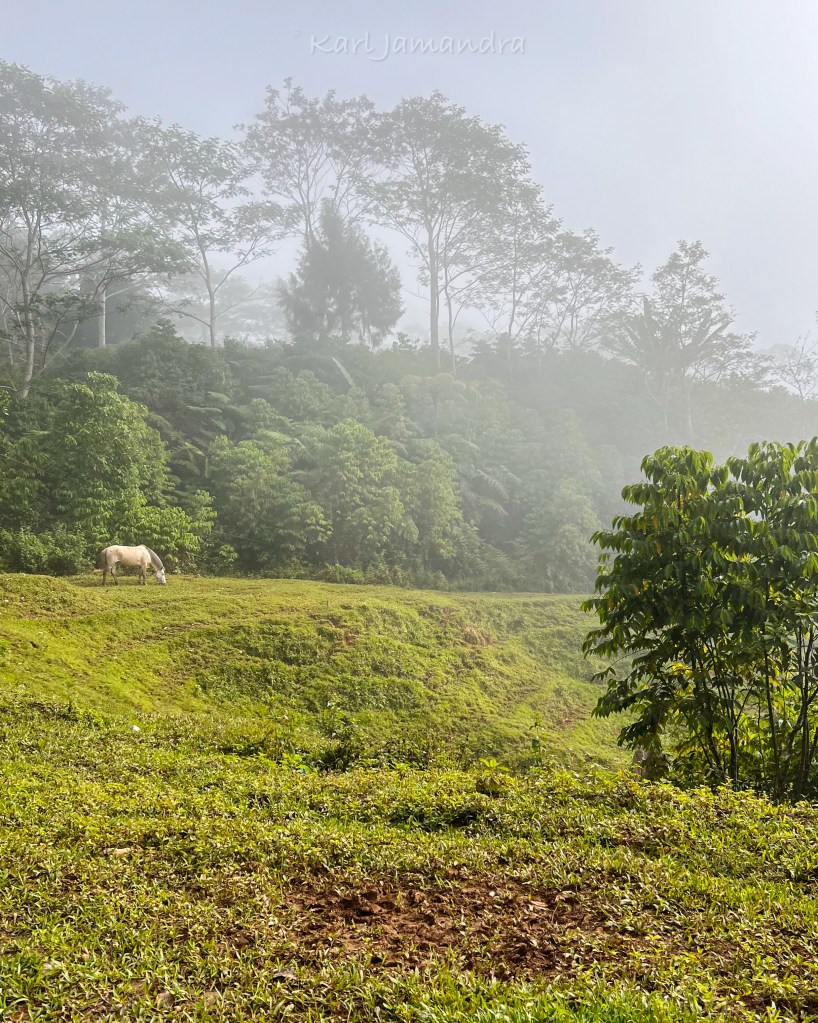
In our recent trip, we were able to visit one of these highland resorts in hopes of seeing the sea of clouds. It’s been said that sea of clouds do appear in this part of Maragusan, though at times, they don’t. When we went there, it was very foggy, which is typical in high, mountainous places. I wasn’t disappointed that I didn’t get to see a sea of clouds. I was elated because I got to experience the place and its foggy, cold weather.
Pyalitan Falls
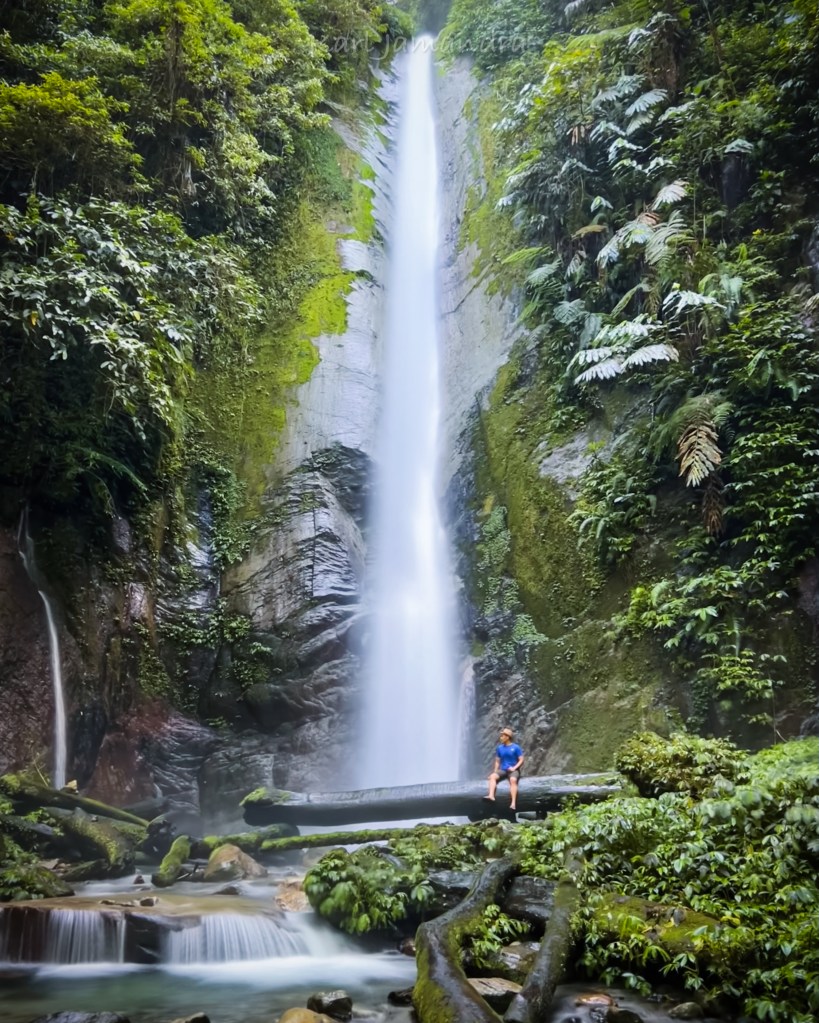
This stunningly beautiful waterfall is just one of the many waterfalls in the highlands of Maragusan! Located in Bgy. Mapawa, Pyalitan Falls is actually a four-tier waterfall, with its highest tier measuring 150 ft in length, easily making it as one of the waterfalls in the Davao Region.
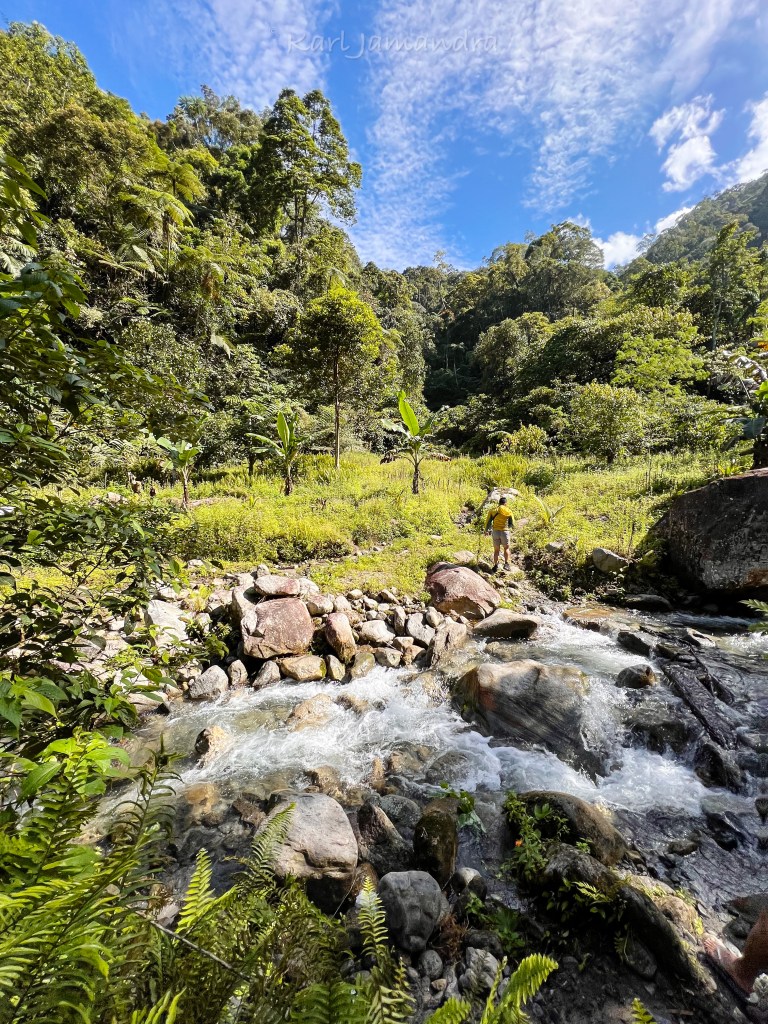
Going to this beautiful waterfall took us only about an hour from the jump off point, but the trek wasn’t so easy! We had to walk on mud, pass by cliffs (not that dangerous-type of cliff but yes, you still have to be careful), traverse the river (thankfully it’s shallow because it didn’t rain), and climb a slippery boulder towards the end (now this can be a bit nerve-wracking – ask for assistance especially if you have trouble reaching with your hands or feet)! Thankfully, we pushed through it, because this stunning 150-foot waterfall was what greeted our eyes when we got there!
Tagbibinta Falls
The municipality of Maragusan has numerous waterfalls in its entirety (as mentioned), but there’s only a handful that are easily accessible to the public. The most accessible one is Tagbibinta Falls (its first of seven tiers), which would only require about 10 minutes to reach from the town proper. No wonder there’s a lot of people when we reached it! Thankfully, we still got a chance to take pictures here by taking turns with the other tourists!
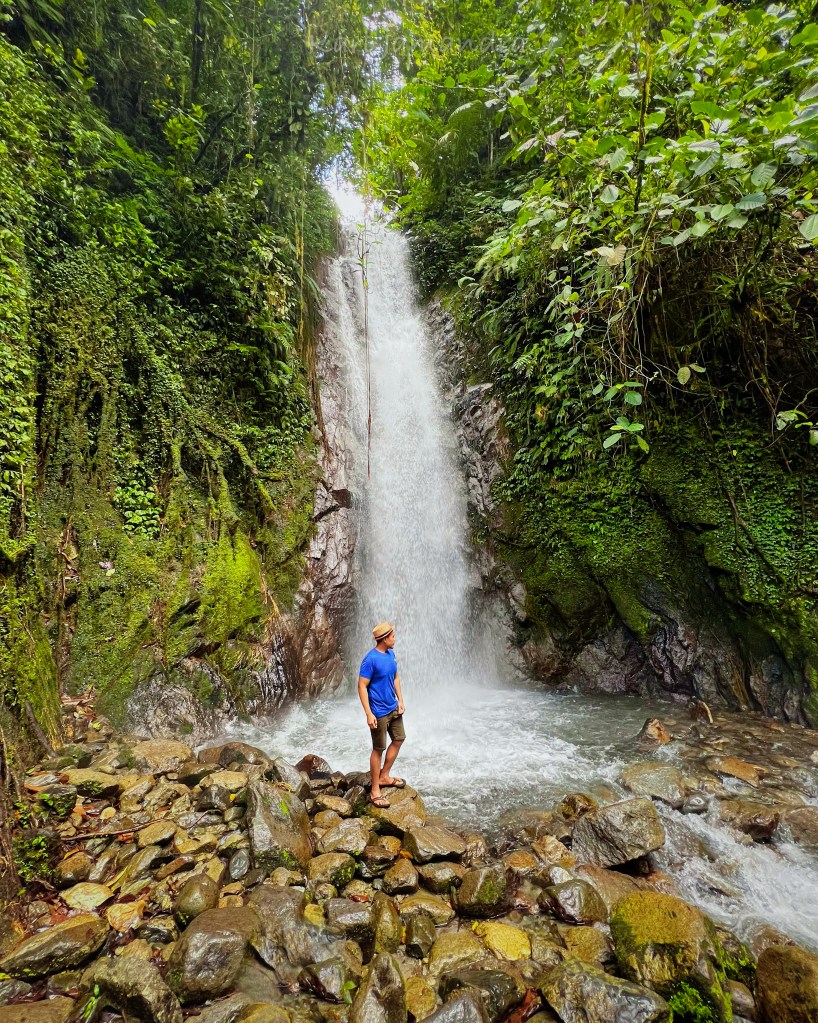
Our tour guide nonchalantly said the name of the falls came from the word, “tagbiyay,” which means small. It was indeed small compared to the other falls we’ve seen in the Davao Region, but it still is beautiful to look at. Moreover, it provides what people yearn from waterfalls — cool, relaxing and rejuvenating waters!
Rafflesia Magnifica Sighting
I was surprised to know that rafflesia, considered to be the largest flower in the world (at least one of its species, Rafflesia arnoldii) can be found in the highlands of Maragusan! Rafflesia is a parasitic flowering plant that has enormous flowers, but has no stems, leaves or roots. Its bud rises from the ground or directly from the lower stems of their host plants.
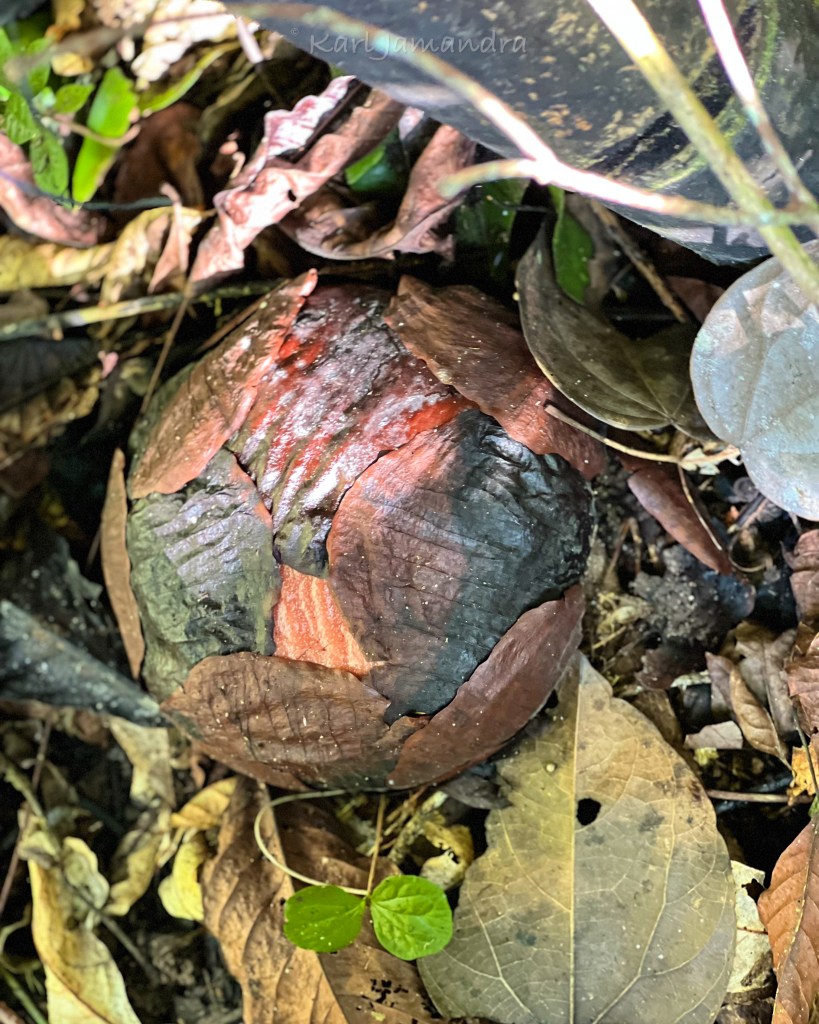
Story has it that in the year 2000, one of Maragusan’s indigenous people dreamt of a fairy who told him to take care of her in a certain landmark that she would disclose. The next morning, he went to the location the fairy has told him in his dream (at the back of a huge tree), and lo and behold, there’s a rafflesia! As it turns out, Maragusan is one of only a few places where rafflesia lives and thrives. The said IP then reported it to the LGU of Maragusan.
Here are is a picture of rafflesia that I took. Notice that it’s not in full bloom here, which means it is still in the later stage of opening. I’ve also seen one that has already hit full bloom a few days ago. Take note that the blossom of a rafflesia only lasts for 5 to 7 days.
***
How did you find Maragusan and its wonders? I hope I get to inspire you to travel here with this blog post! Kindly comment below if you have questions, reactions or even suggestions! Thank you. J
 K.O. the Explorer