
I’ve heard a lot of interesting things about Myanmar even before. When I saw posts about the beautiful town of Bagan have surfaced on Instagram, I said to myself that I must go there soon. It’s really great that I have been planning to have an Indochina trip with my Shembot Squad brothers, and we made sure to visit this country in our travel.
This is the third leg of our Indochina trip. If you have been following my blog posts, you would know that we started our trip in Thailand, and then proceeded to Laos. After flying from Vientiane (Laos) to Bangkok (Thailand), we took another flight going out but this time towards Mandalay, our gateway to Myanmar.
MYANMAR

Myanmar, also called Burma, is the westernmost country in the Southeast Asia region. It is bordered by India and Bangladesh (already part of South Asia) to the west, Thailand and Laos to the east, China to the north and the Bay of Bengal and Andaman Sea to the south. While the country’s capital is Naypyidaw, its largest city is its former capital city, Yangon. Yangon comprises 7.6 million out of the country’s 54 million.


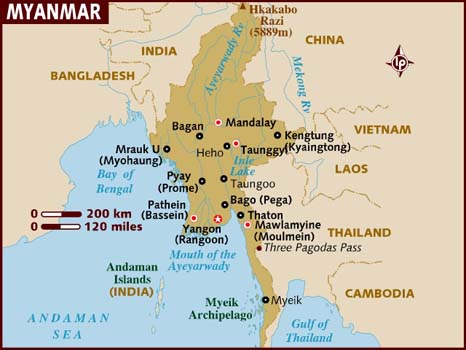
The country of Myanmar has had a long history dating back to the second century when its first-known city states emerged. The Pyu people, one of its early inhabitants, were heavily influenced by their trade with India, importing the religion of Buddhism, as well as other cultural, architectural and political concepts. Currently, 87.9% of the country’s population practices Buddhism.
Persecutions in religion as well as minority groups in Myanmar have been reported through the years. These were said to have brought about by the country’s former military government, touted as one of the world’s most repressive and abusive regimes. Human rights have significantly improved after the country’s transition to a new government in 2011.
The country of Myanmar boasts many travel spots and attractions from its large cities like Mandalay and Yangon to ancient cities such as Bagan. Due to its political climate, it’s only recently that its tourism is gaining traction. This blog aims to attract the readers to come and visit this amazingly beautiful country.
IMPORTANT THINGS TO REMEMBER WHEN TRAVELING TO MYANMAR:
- Internet connection here is not as easily accessible compared to Thailand. Hotels or hostels do have Internet, but if you won’t be staying long (as in three or more days), it would be better if you buy a SIM card that you can use while staying in the country.
- Exchange your currency at the airport. You may have a hard time finding foreign exchange shops while at the town or city that you are currently in.
- Transportation here is not that difficult. Just make sure you know where and when to go. Itinerary is a must if you want to save your time.
GUIDE THROUGH OUR ITINERARY IN MYANMAR
We spent three days in Myanmar during our Indochina trip. And would you believe that we went to three travel destinations for those three days in this country? We flew from Bangkok to Mandalay during Day 1. We spent the whole day exploring the city before riding a bus from Mandalay to Bagan that night. We have reached Bagan during the wee hours of the morning and spent only a few hours of sleep before exploring it for the whole of Day 2. We then rode the bus again but this time from Bagan to Yangon, our last stop for the country of Myanmar. We have arrived in Yangon early in the morning. We met up with a Khmer friend, Htoo, and he assisted us in touring the city for the whole of Day 3. When night came, we flew from Yangon back to Bangkok. Woah, just writing and reading that already made me tired! Haha.
MANDALAY
Mandalay is one of the brooding cities of Myanmar, and is considered to be the center of Burmese culture. More so, it is Upper Burma’s main commercial, educational and health center.
It was late in the morning when we have arrived in Mandalay. Famished, we looked for a restaurant in the city proper to eat. We ended up eating in one of the hotel restaurants in downtown Mandalay.

After that, we proceeded to touring of the city by riding the tuktuk, starting with Sandumi Pagoda.
SANDAMUNI PAGODA
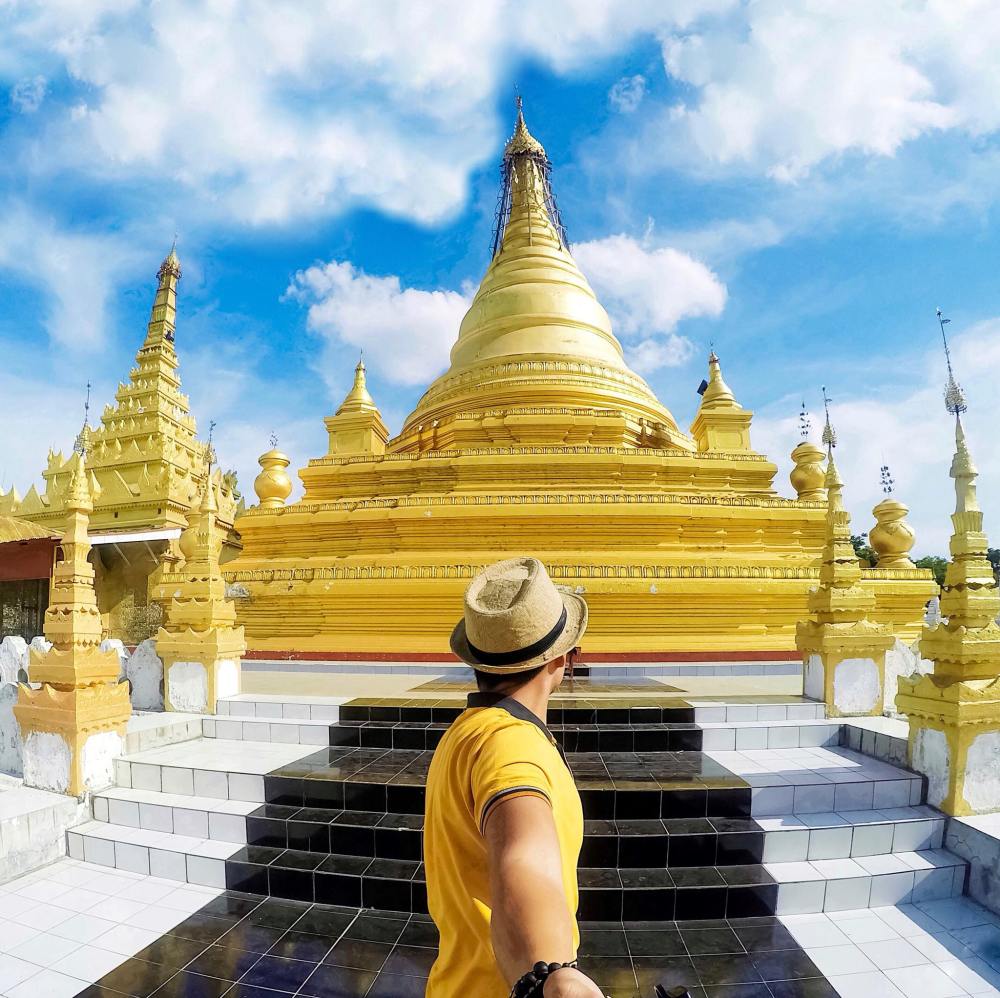
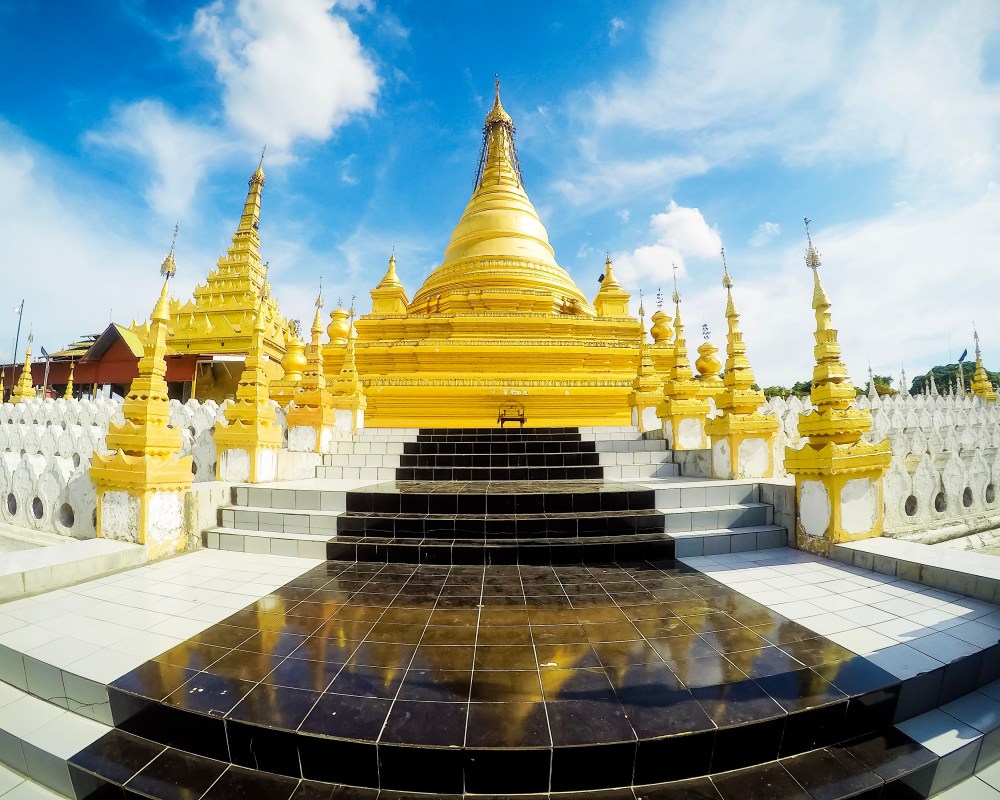
Located on the foot of the Mandalay Hill, Sandamuni Pagoda is the first magnificent structure that I have witnessed in the country of Myanmar. Distinguished by its large, golden zedi (a solid, bell-shaped structure), Sandamuni Pagoda is encumbered with thousands of white stupas made up of marble.


This pagoda has been built as a memorial to Prince Kanaung, the fiery “War Prince” who attempted to modernize their country by sending scholars to Western countries and building an arms industry. He was supposed to be the successor to the throne after his brother, King Mindon. However, he was murdered by two of his nephews, Mindon’s sons, who were unhappy about it.
SHWENANDAW KYAUNG (Golden Palace Monastery)

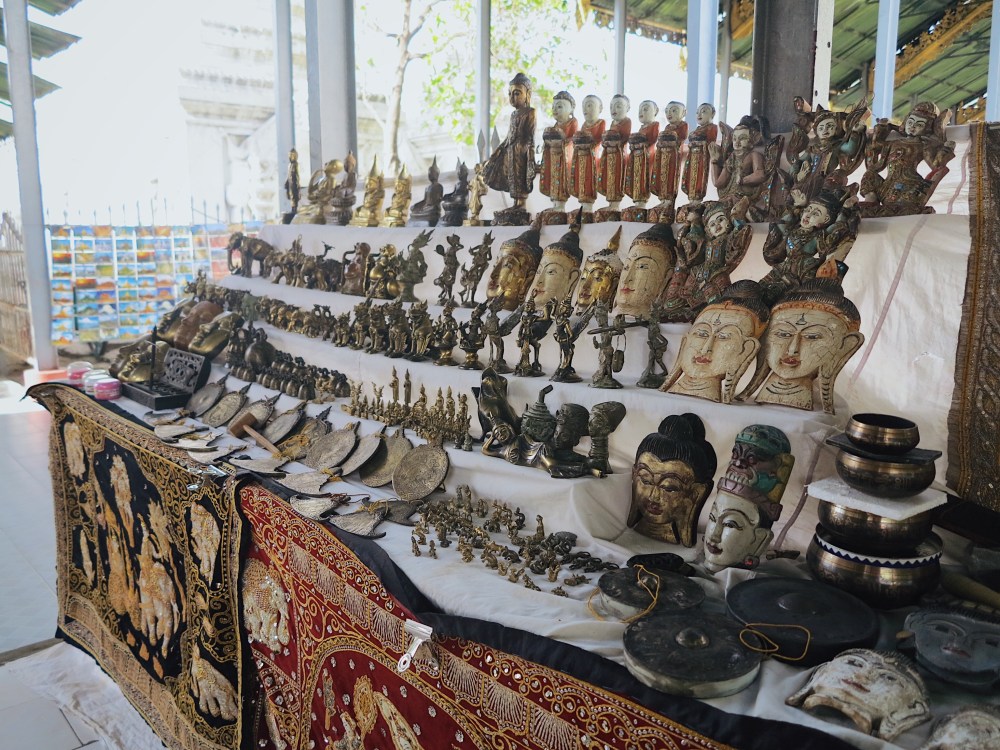
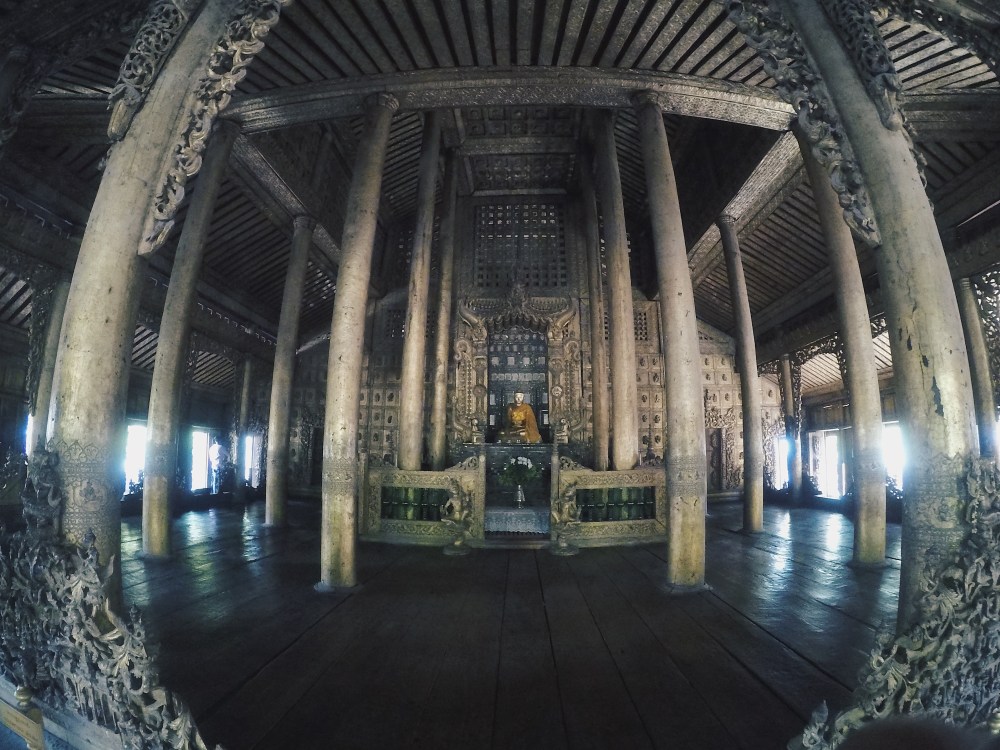
The Shwenandaw Monastery is a wooden monastery made out of teak wood. It is said that this monastery is originally a part of the Royal Palace in Amarpura. But when the capital was moved to Mandalay in 1857, the monastery was taken down and rebuilt here in Mandalay. The king lived in this structure, but when he died it was converted to a monastery.

KATHUDAW PAGODA (The World’s Largest Book)

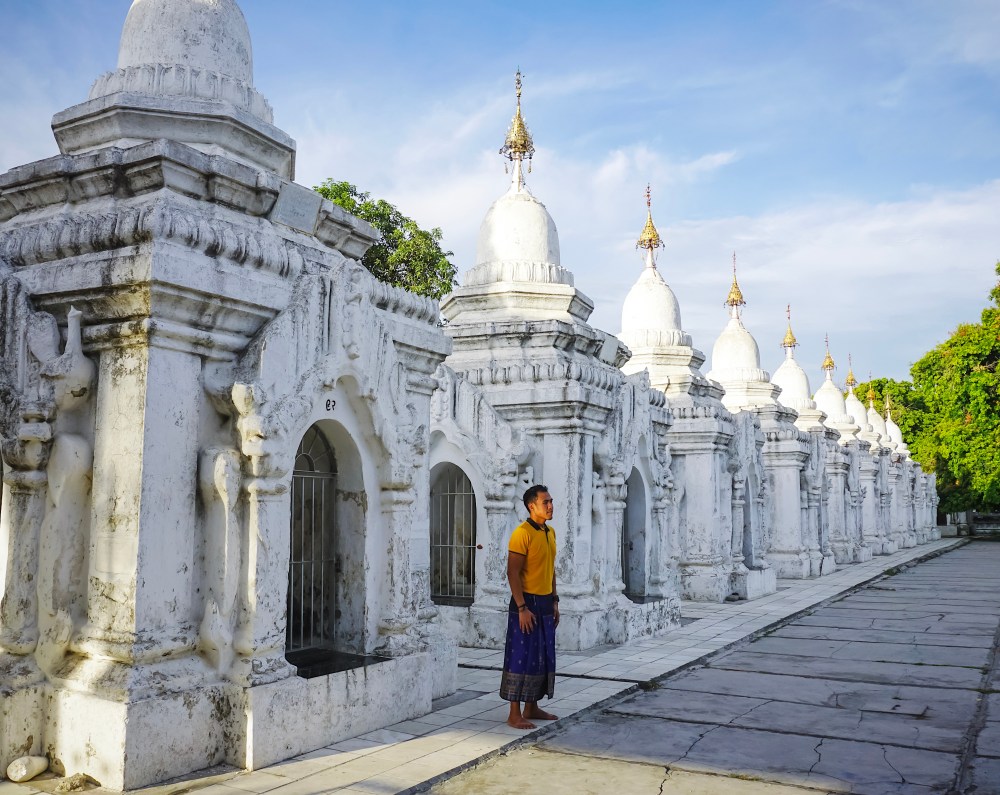
Touted as the world’s largest book, Kathudaw Pagoda contains 729 stupas wherein texts from the Buddhist scriptures called Tipitaka are inscribed. It is said that it would take a person over a year to read all these scriptures even if he or she is going to spend 8 hours of reading a day.

U BEIN BRIDGE

Standing with a length of 1.2 km, the U Bein Bridge is the oldest and longest teakwood bridge in the world. Constructed in 1849, it has been used by the locals to croos Taungthaman Lake.
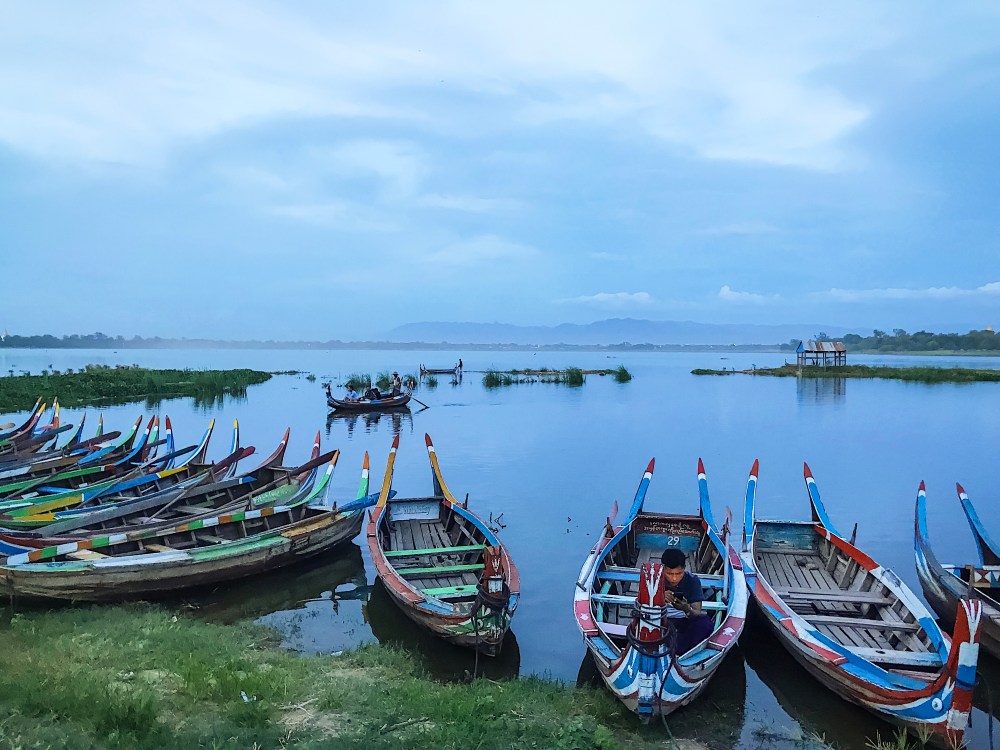
People suggest going here early in the morning for the sunrise but since we didn’t have the luxury of time, we spent the sunset here instead. What we saw was a glorious bidding adieu of the light to the embracing darkness of the night.
BAGAN
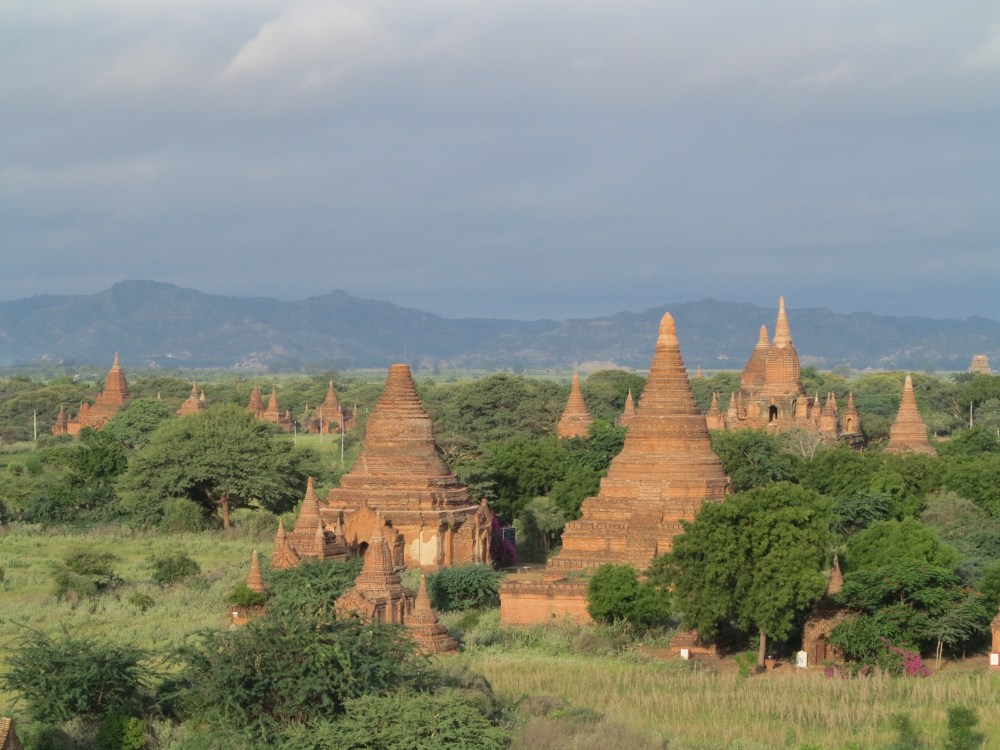
One of the most magical places I’ve been to is Bagan. It has this certain air of mystery with all of its hundreds of temples in the midst of a tropical setting. Yet, I couldn’t help but still feel a welcoming atmosphere the whole day that we stayed in this ancient city of Myanmar.
As the capital of the first kingdom that unified the regions that would later constitute modern Myanmar, Bagan saw the rise of over 10,000 Buddhist temples, pagodas and monasteries during its heyday. Over 2,000 of these religious structures still stand up to this day.
SHEMBOTS IN ACTION: Using an electric scooter, we explored this ancient city from sunrise til sunset. It felt like we’ve went to a lot of places and experienced their culture yet there’s something in me that wants to go back here in the future. And when the right time comes, I will!
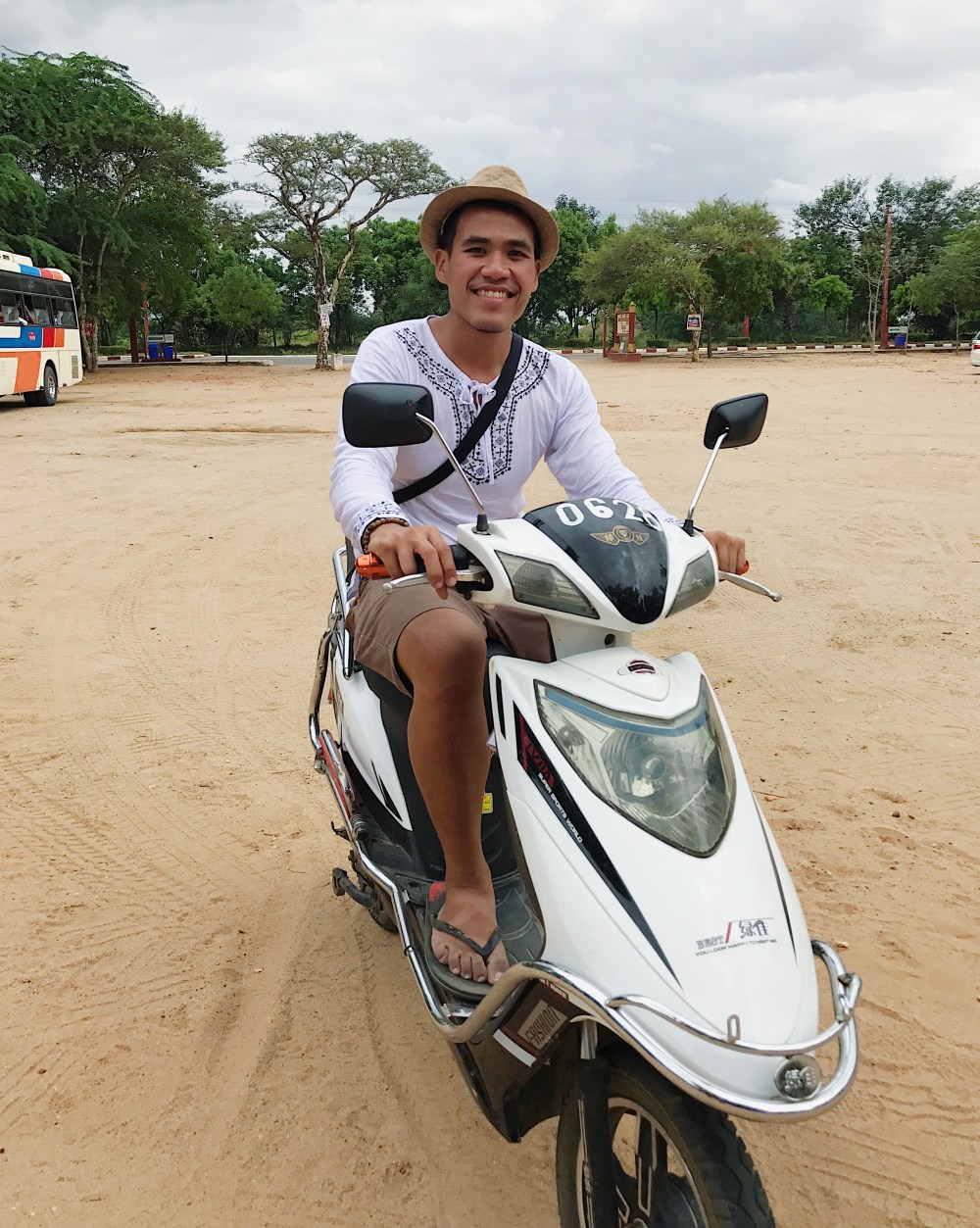
In all honesty, there were a lot of temples that we went to in Bagan. Here are some of them:
ANANDA TEMPLE
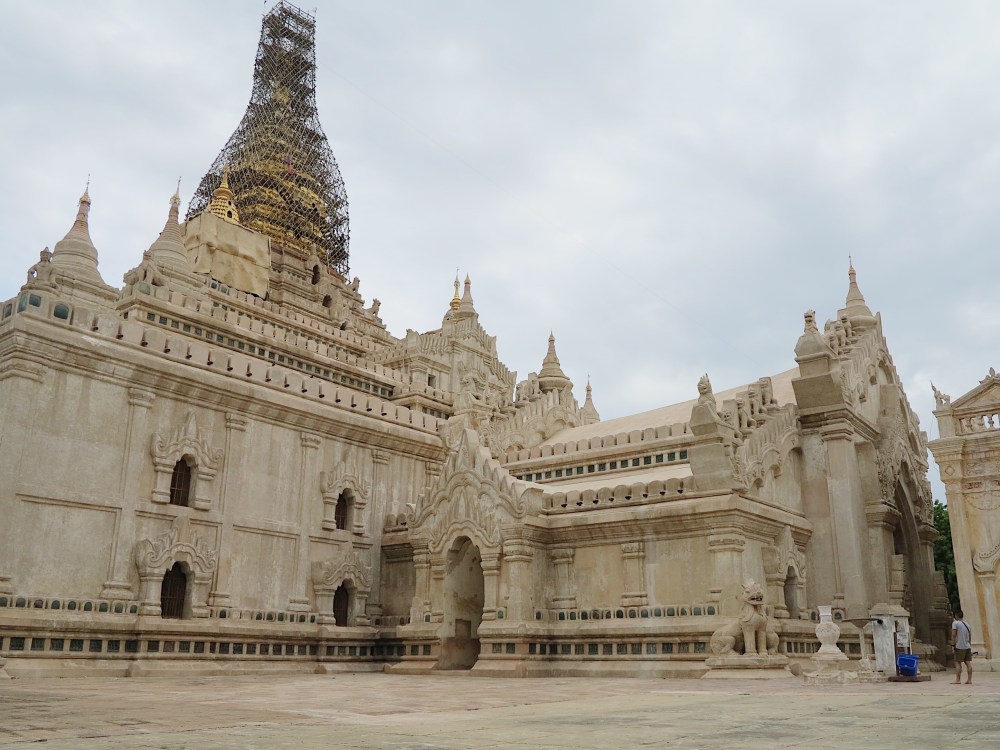
Built during the 12th century, Ananda Temple is one of the most beautiful Buddhist temples in Bagan. Its architectural style shows Mon (an administrative part of Myanmar) and North Indian influences.
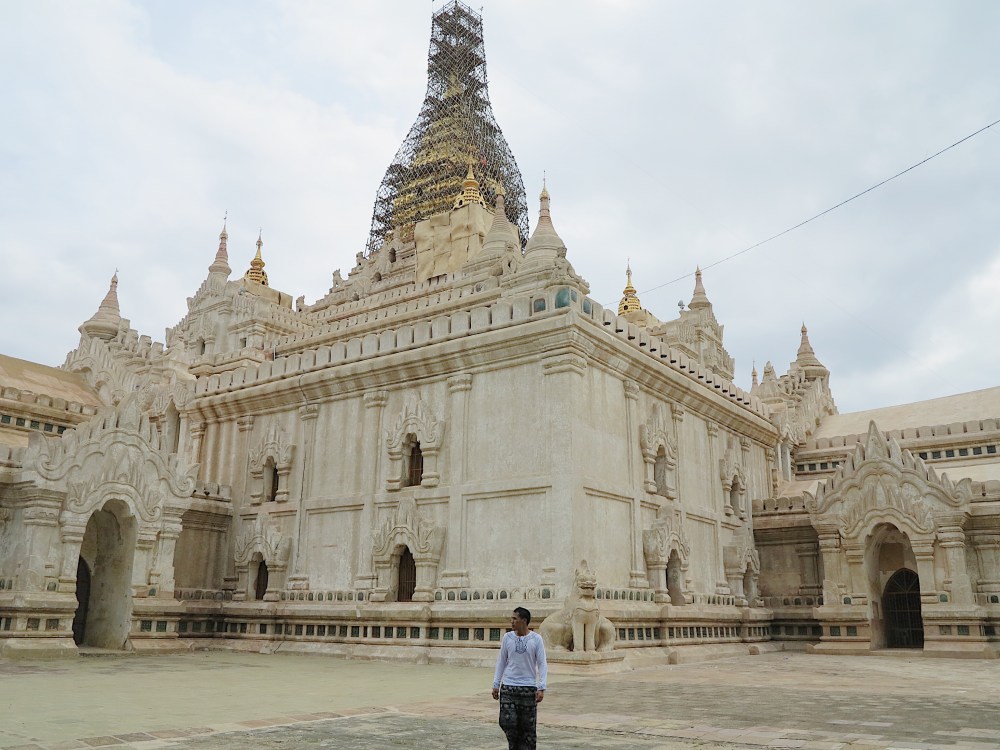
But its main feature is the gilded (meaning, gold-covered) sikhara, the tower-like spire on top of the pagoda. Unfortunately, we were not able to take a good look of the sikhara because it was being repaired the time we were here in Bagan.


What’s more interesting about Ananda is that it houses four 9.5 meter-standing Buddhas, each one facing the cardinal directions of north, east, south and west. Gautama Buddha, the most recent Buddha who lived about 2,500 years ago, is facing west.
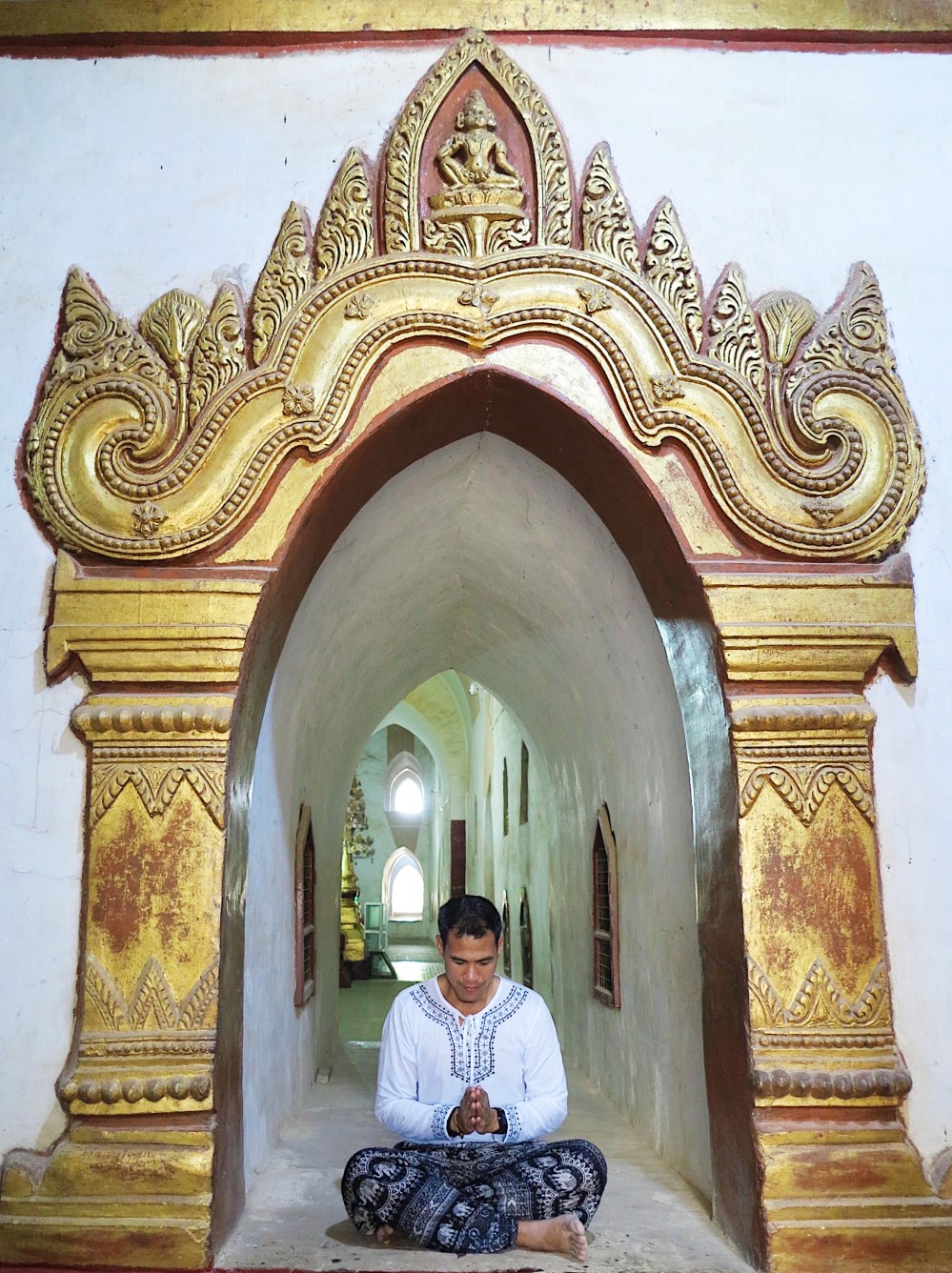
ALODAWPYI PHAYA
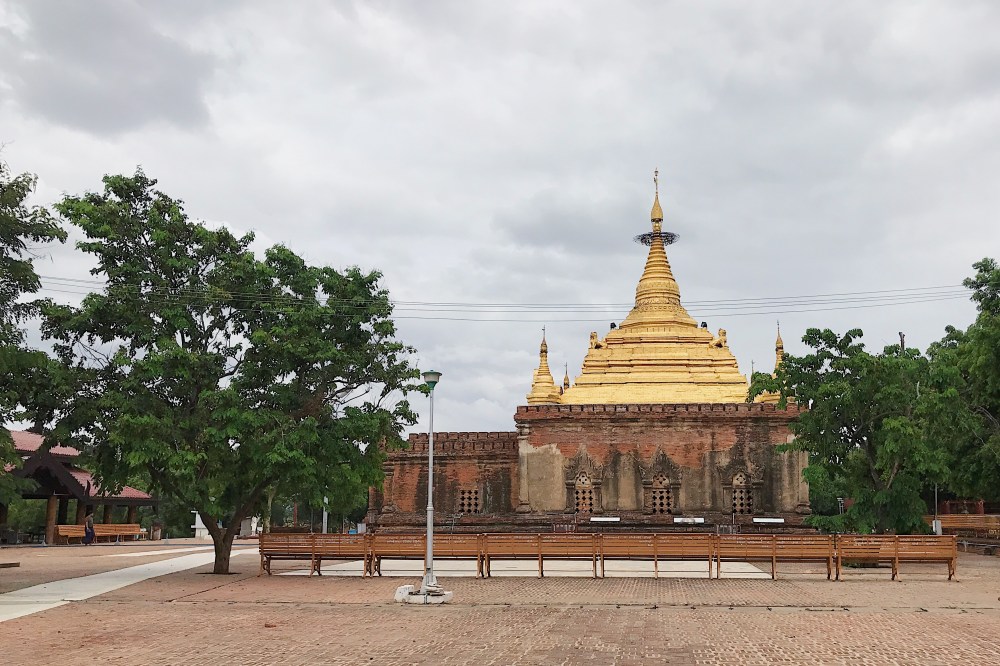
One of the operational temples in Bagan, Alodawpyi is a place where monks go to, chant their hymns and pray.

SHWESANDAW PAGODA

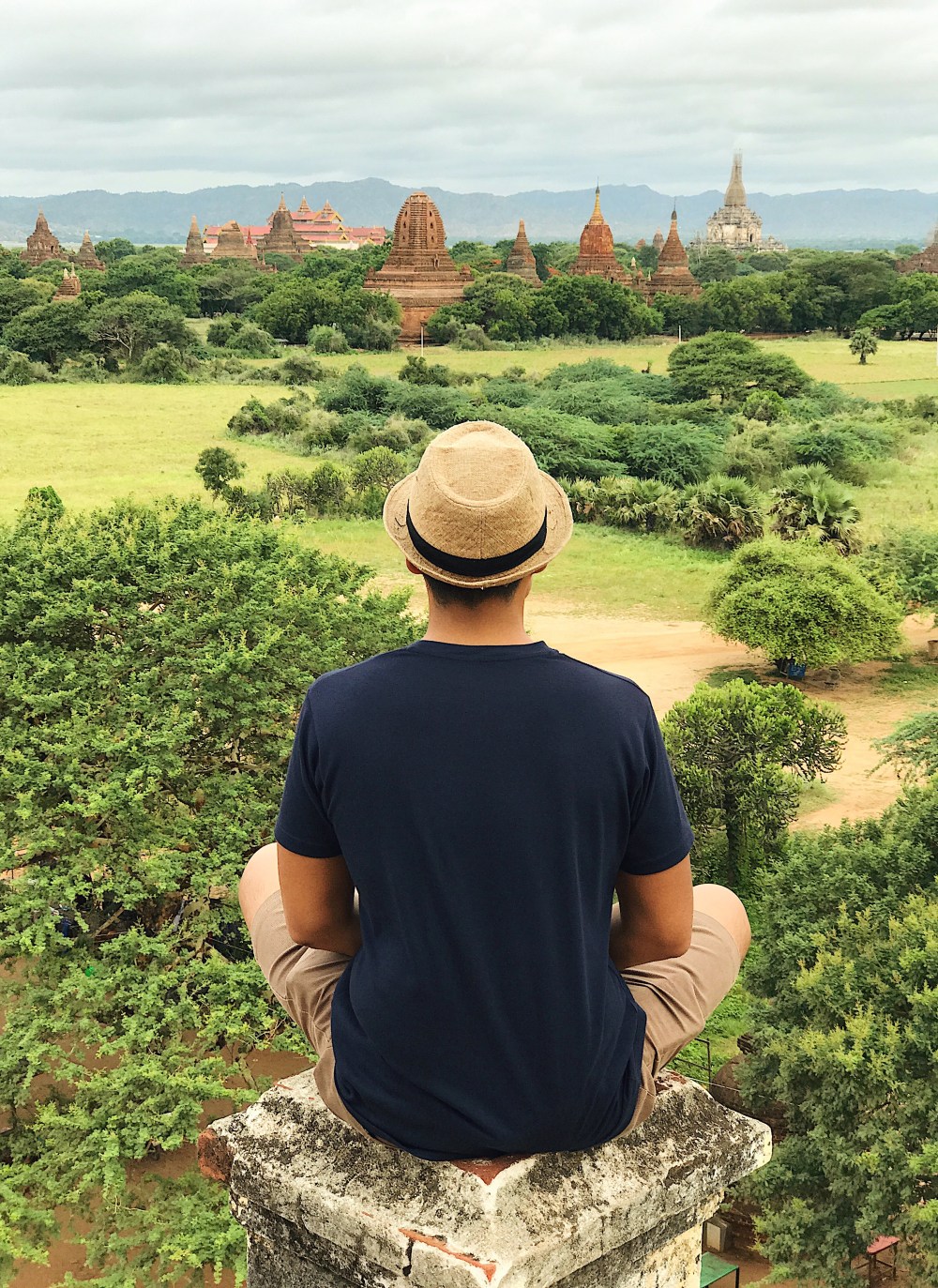
Said to be one of the best places to go to if you want to have a good view of the sunrise, the Shwesandaw Pagoda is one of the most visited pagodas in Bagan.
Containing a series of 5 terraces and topped with a cyndrical stupa containing a bejewelled umbrella called hti.
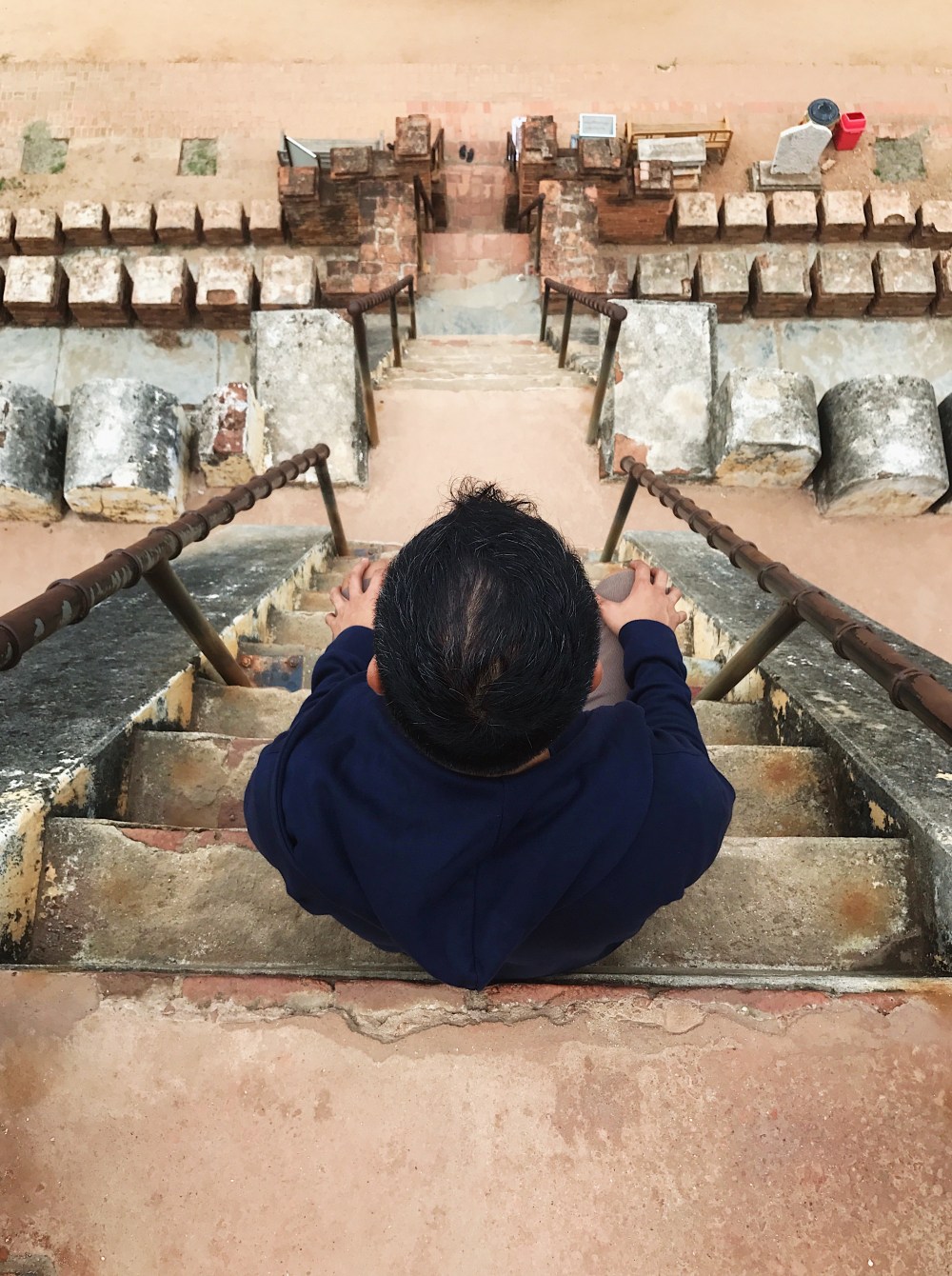
It’s just funny that I was not able to take a picture of the pagoda itself, only the views when were on it.
MAHA BODI PAGODA
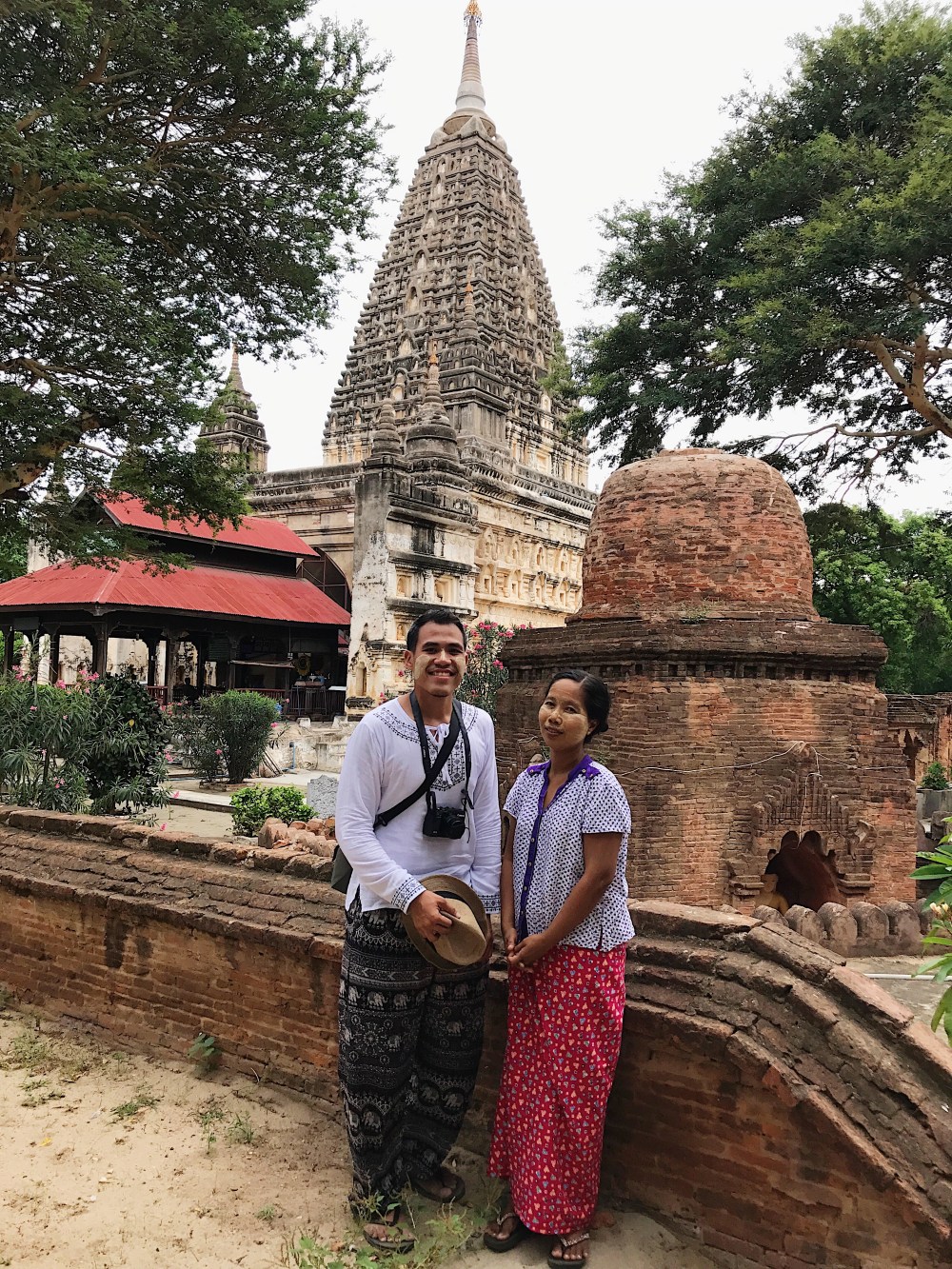
Built during the 13th centure, Maha Bodi contains a large pyramidal tower with many niches containing over 450 images of Buddha.

GAWDAWPALIN PHAYA
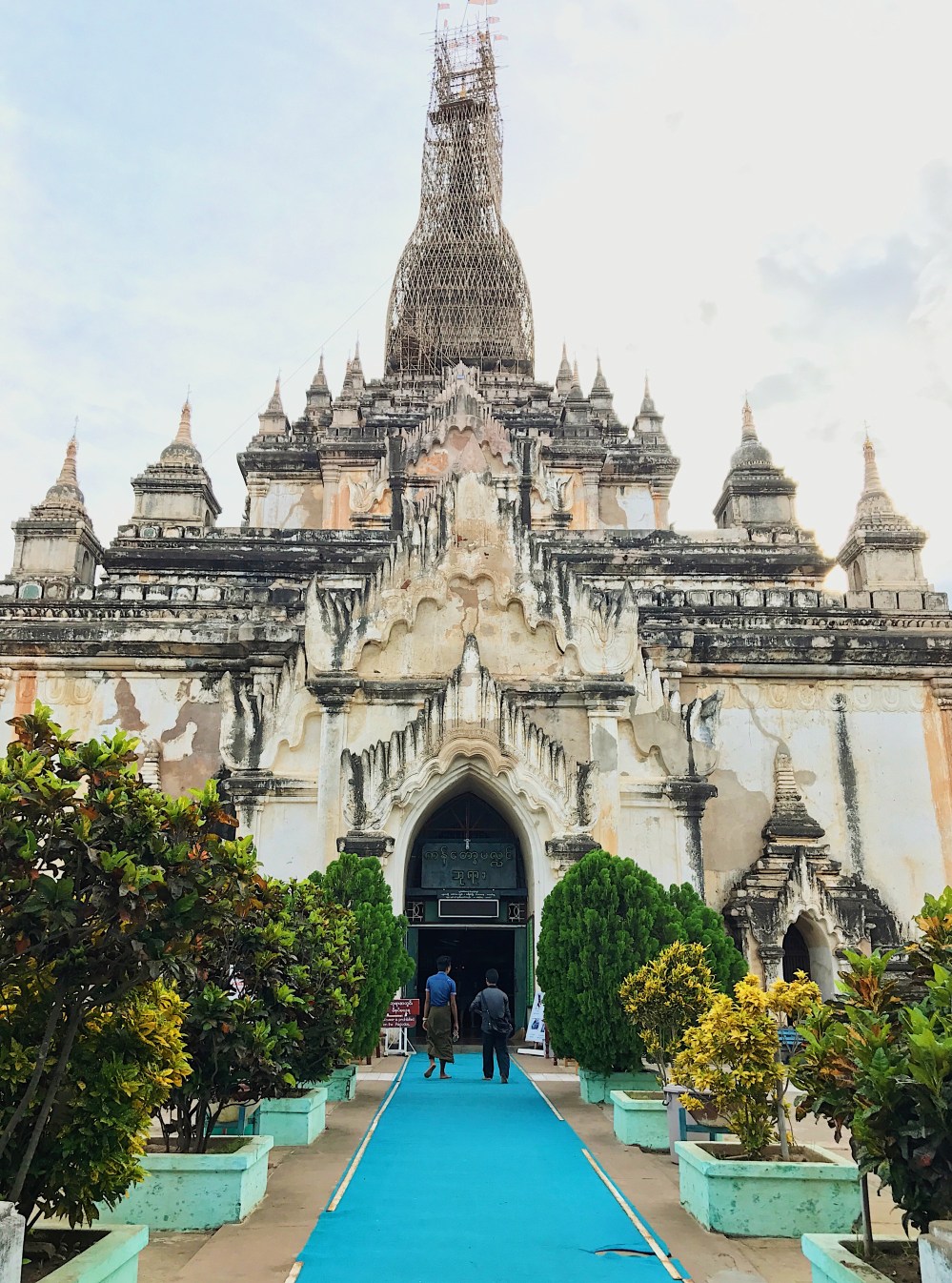
The second tallest temple in Bagan, Gawdawpalin Temples is two storeys tall and containts three lower terraces and four upper terraces. It is one of the many temples that we’ve seen and visited in Bagan.
When evening came, a van went to our hotel to escort us towards the bus station. (Apparently, this van goes to different hotels as service for the tourists and travelers.) We boarded the bus where we slept for the whole night. Come early morning, we were already in Yangon!
YANGON
Formerly known as Rangoon, Yangon served as Myanmar’s capital from 1853 to 2006. An ardent fan of geography especially during my elementary and high school years, I was actually surprised that it has changed its name and that it’s no longer Myanmar’s capital! Anyway, even though the city capital has moved to Naypyidaw, Yangon has remained to be the country’s largest city and most important commercial center. The city houses Myanmar’s most sacred Buddhist pagoda, the Shwedagon Pagoda, which is thinly covered with gold all over its structure!

SHEMBOTS IN ACTION: We arrived in the bus station of Yangon at around 7 in the morning. After refreshing and eating our breakfast, we proceeded to our itinerary for the day. I can still clearly remember what my friends and I did during that day and it is still making me laugh up to now! I won’t go further into details but what I can say is that those things have tested our friendship. One of these things I am referring to is walking most of the time while going places in Yangon because we thought the places we were going to were just near each other! That’s not actually a problem in itself, but if you’re going to consider carrying your entire bags the entire time, then that’s really a different matter! The travel destinations in Yangon are not for walking. Hire a cab driver! Haha.
We went to these places during the morning:
YANGON CIRCULAR RAILWAY

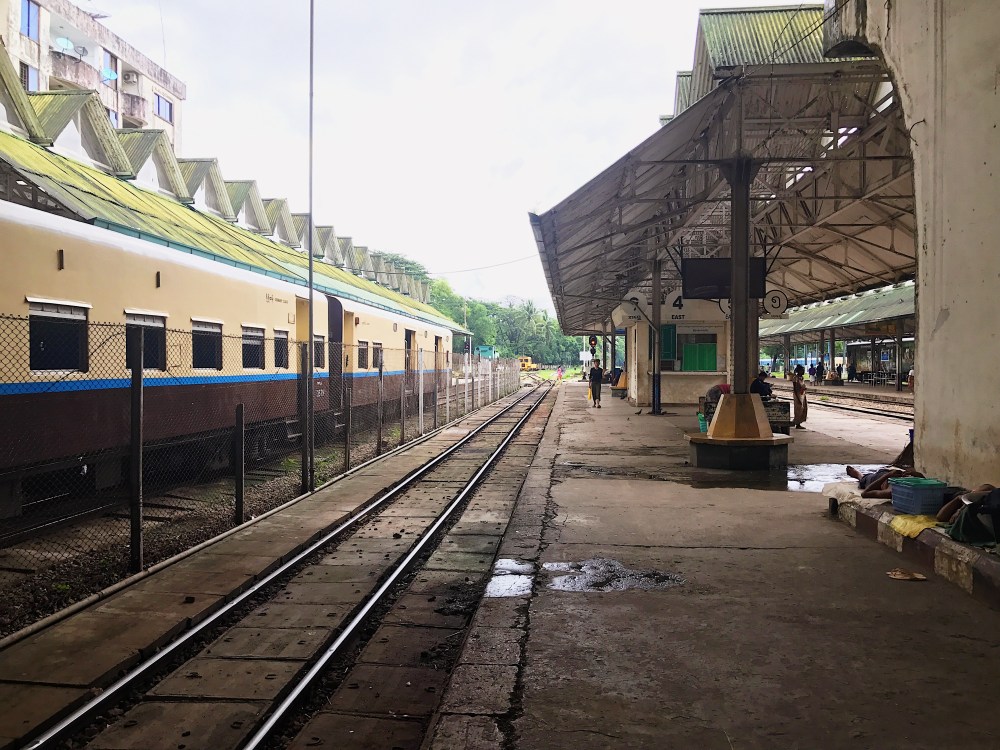
The Yangon Circular Railway is the city’s local commuter rail network that serves the Yangon metropolitan area. Operated by Myanmar Railways, this railway system has a span of 45.9 kilometers, having 39 stations that connect adjacent towns and suburban areas to Yangon.

YANGON CITY HALL
We stayed for a while around downtown Yangon and we saw its city hall as well as its other local government units.
DOWNTOWN YANGON
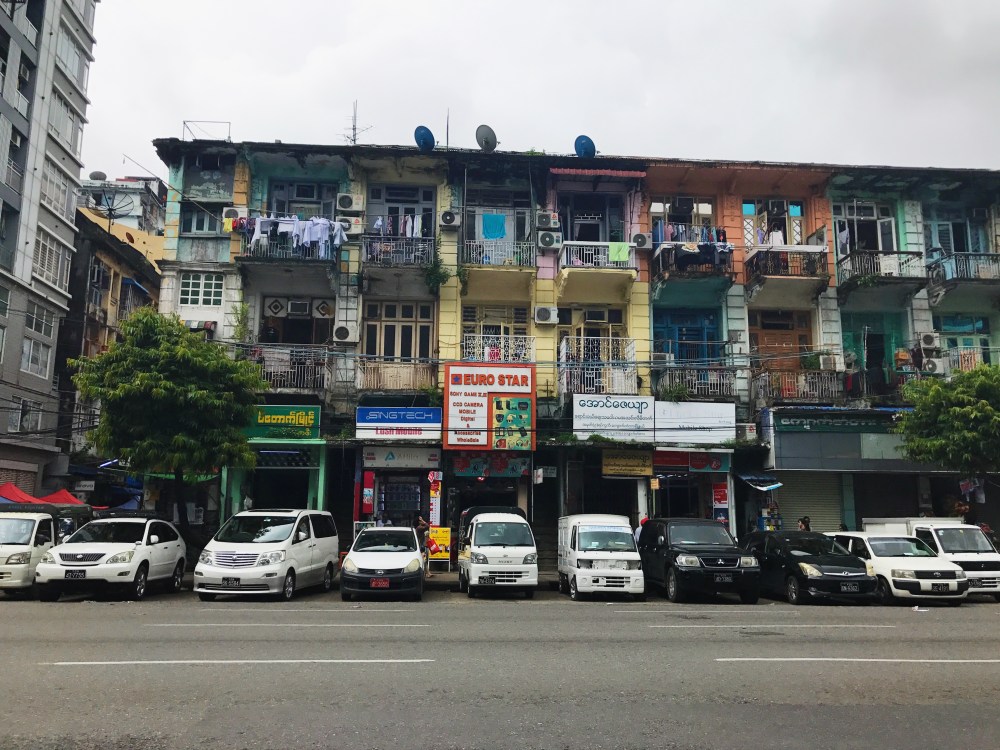


After lunch, we met our Burmese friend, Htoo, who helped us in touring the city. We then went to the following places with him as our guide:
CHAUKHTATGII BUDDHA TEMPLE
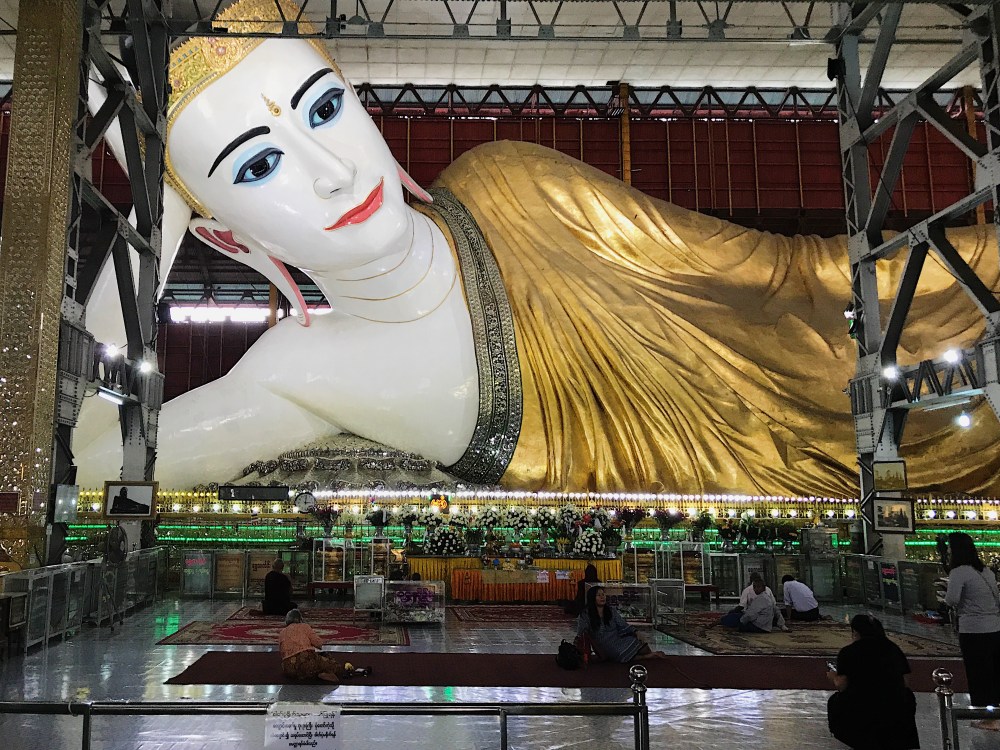
Home to one of the most revered Buddha images in Myanmar, The Chaukhtatgii Buddha Temple is founded by Sir Po Tha, a wealthy Burmese Buddhist. Aside from the 217-ft long reclining Buddha, the temple also shows various images of Siddharta Gautama, detailing significant events of his life and works.

SHWEDAGON PAGODA

Undoubtedly the most beautiful temple in Myanmar with its grandiose, gilded structures, the Shwedagon Pagoda is located on Singuttara Hill in the city of Yangon. Believed to have been completed during the 6th century (though others claim it to be a lot older), this pagoda is measured to be 105 m tall.

I was awestruck the first time I laid my eyes on this structure. When I saw its spire and a part of its upper structure from below, I couldn’t wait to see and experience it in front of myself. And when I was already in front of it, I couldn’t help but feel beyond amazed! Its structure glints with gold as it really is covered with gold! It’s no wonder why this pagoda is so precious to the country of Myanmar.

A flower festivity was being done the day we went there and I couldn’t help but be curious as to what the people involved were doing.

While there were many tourists in the area, there were a lot more people of Buddhist faith praying and offering well-wishes to each other.
The Shwedagon Pagoda is said to be the most sacred Buddhist pagoda in Myanmar, as it is believed to contain relics of the four previous Buddhas.
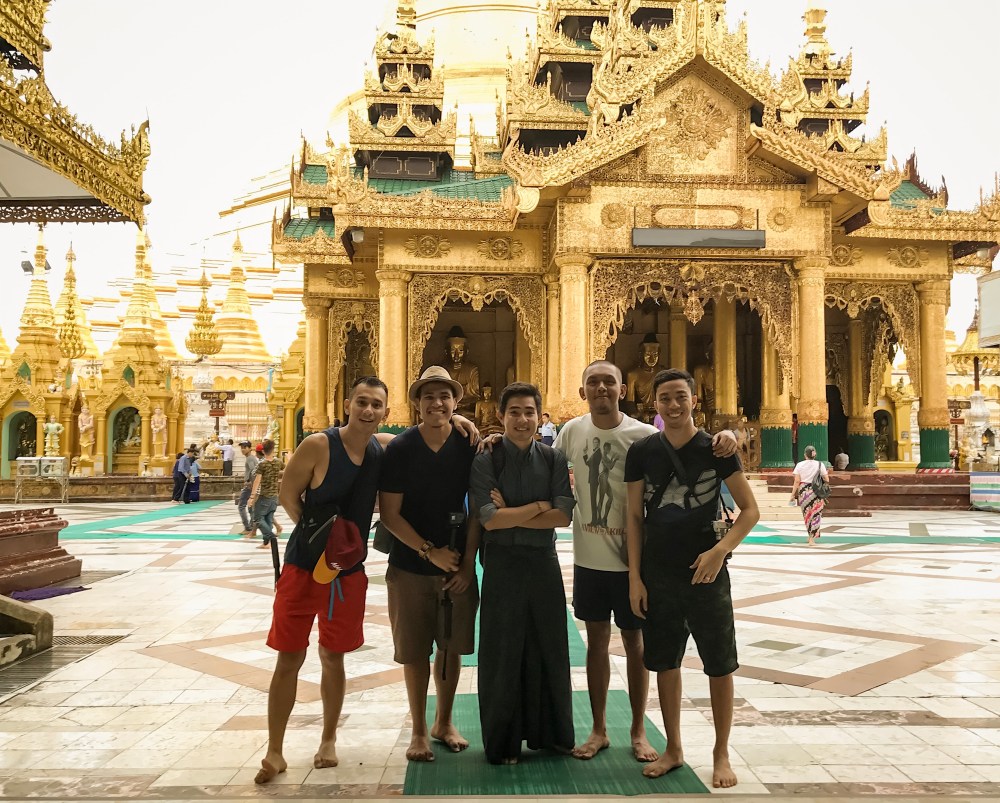
After that fun yet really tiring day in the city, we headed to Yangon International Airport for our flight going back to Bangkok, Thailand. There we would be preparing for the next leg of our trip, which is Siem Reap in Cambodia!
LIST OF EXPENSES IN MYANMAR
Here are some of the things we have spent on while traveling in Myanmar. Note that there are meals not included here. Also take note that a big part of the expenses went to the souvenirs.
Mandalay:
Bus from airport to downtown – 4,000 kiat (P145)
Lunch in a hotel restaurant – 8,000 kiat (P290)
Motorcycle ride from the hotel restaurant to our first travel destination in Mandalay – 4,000 kiat (2,000 kiat each, P72)
Taxi rented from downtown Mandalay to U-bein Bridge then U-bein Bridge back to downtown – 12,000 kiat (3,000 kiat each, P109)
Bus from Mandalay to Bagan – 9,000 kiat (P325.53)
Bagan:
Ever New Guest House in Bagan (We booked two rooms for the four of us. We paid about an estimated P450 each. This comes with free breakfast. Other meals we ate here are not included.) – 12,500 kiat (P450)
Bike rental to explore Bagan – 1,500 kiat (P54)
Night bus from Bagan to Yangon – 4,625 kiat (P167)
Yangon:
Yangon Circular Train – 100 kiat (P4) – YES! IT IS THIS CHEAP TO RIDE THEIR TRAIN!
999 Shan Noodle Shop for brunch: Wanton soup and drinks – 3,000 kiat (P109), milk tea – 1,200 kiat (P43), chicken balls – 250 kiat (P9)
Entrance fee to the Reclining Buddha – 2000 kiat (P72)
Entrance to Shwedagon Pagoda – 8000 kiat (P289)
Myanmar street food – 500 kiat (P18)
Souvenirs (from Mandalay to Yangon) – 50,000 kiat (P1800)
Estimated total expenses: 109,675 kiat or about P4,000
***
Thank you for reading, guys! I hope this blog post has inspired you to travel to the country of Myanmar. Even though we’ve been to many places for only three days in this country, I really still wish we had more time exploring it. Anyway, if you have comments, questions or suggestions, don’t hesitate to ask me below! Watch out for the continuation of our Indochina trip with our travels to Cambodia, Malaysia and Singapore!
 K.O. the Explorer